Uncover Amsterdam’s Local Beer Treasure: Krux Brewery

If you are a tourist in Amsterdam with your eyes set on visiting a brewery your first thoughts will likely go to the iconic windmill of ‘t IJ or maybe places like De Prael, Troost or even the Heineken brewery. But there are more interesting breweries to visit in Amsterdam, if you know where to look. So here is my first installment of “What else to drink in Amsterdam”, a look at some of the smaller, unknown breweries the capital has within its borders. Today we start off with a little gem in the far eastern part of Amsterdam: Krux.

Krux is located on Cruquis Island. Once it was part of the harbor, where big ships would dock and deliver their goods, often from Asia. The brewery is located at exactly such a site with a rich maritime and industrial history. But you wouldn’t know that immediately when you walk into the neighborhood.

Most of its industrial history has vanished, replaced by newer looking residential buildings. If you are lucky your apartment will overlook the last part of the water before it turns into the Ijsselmeer. Interesting, but not something unique these days in expanding cities.

Yet in a courtyard of sorts stand three different buildings that are from another era. The early twentieth century as it turns out. They were buildings of a soap manufacturer. Coconut oil was brought in all the way from Indonesia and turned into ingredients, for margarine for example. This factory didn’t last long, when the owner died the company folded but the buildings remained.
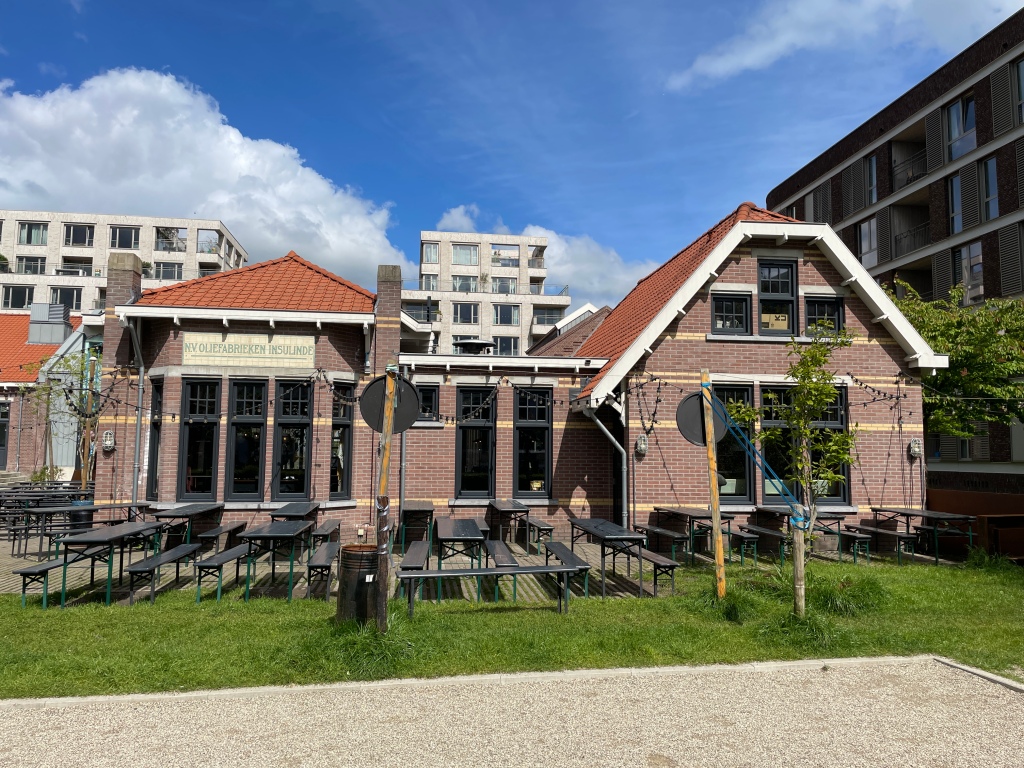
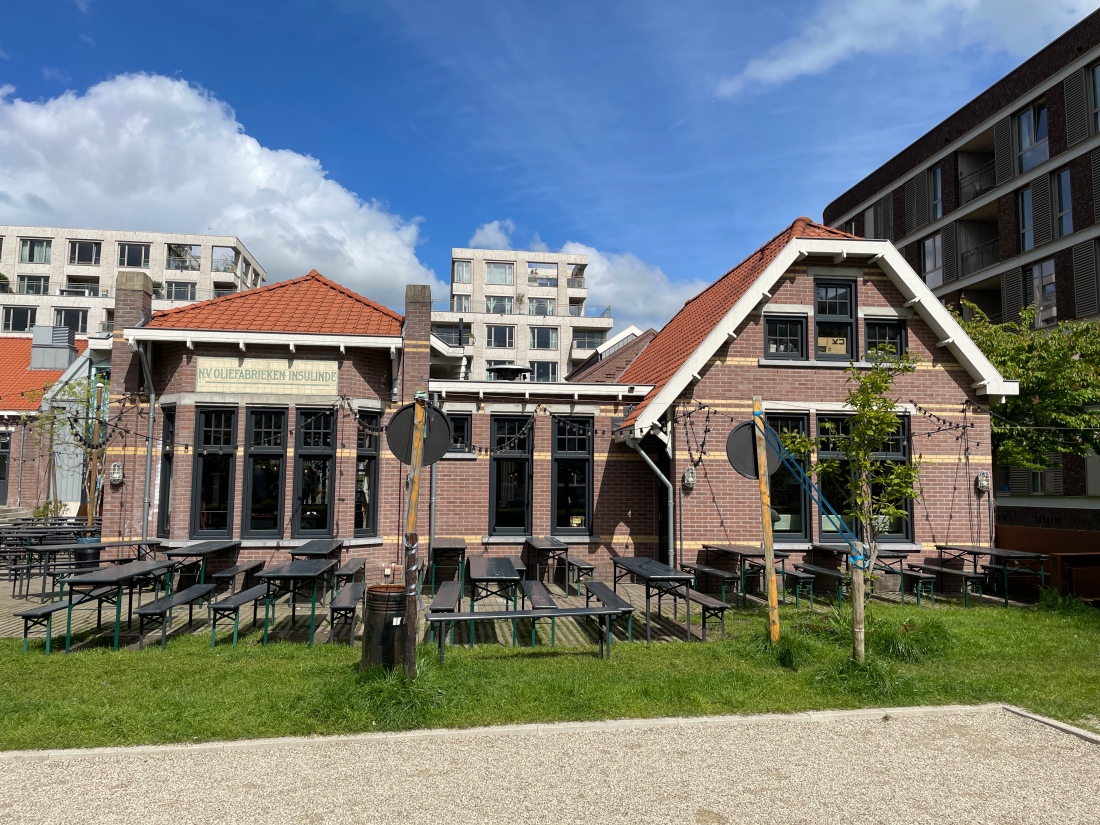
The house of the owner now houses the brewery and brewpub. Some might remember it as the home of the Bruut brewery once. A brewery that Ward, the brewer and part-owner, was once part of but that split into several new businesses, Krux being one of them. Ward also has a personal connection to Dutch brewing history. His onetime neighbor was Kasper Peterson who, with the money he made from penning a number one hit song (Drukwerk’s Je Loog Tegen Mij), decided to start a brewery. That brewery was ‘t IJ, located on the beginning of the island next to the now iconic windmill. But knowing a brewer wasn’t the only thing, Ward also learned to brew in several places, including a high profile brewing school in Gent, Belgium. It made him a technically very efficient brewer who can now use solid brewing techniques while making modern beers.

But back to the Krux building. The ground floor is split into two separate rooms.
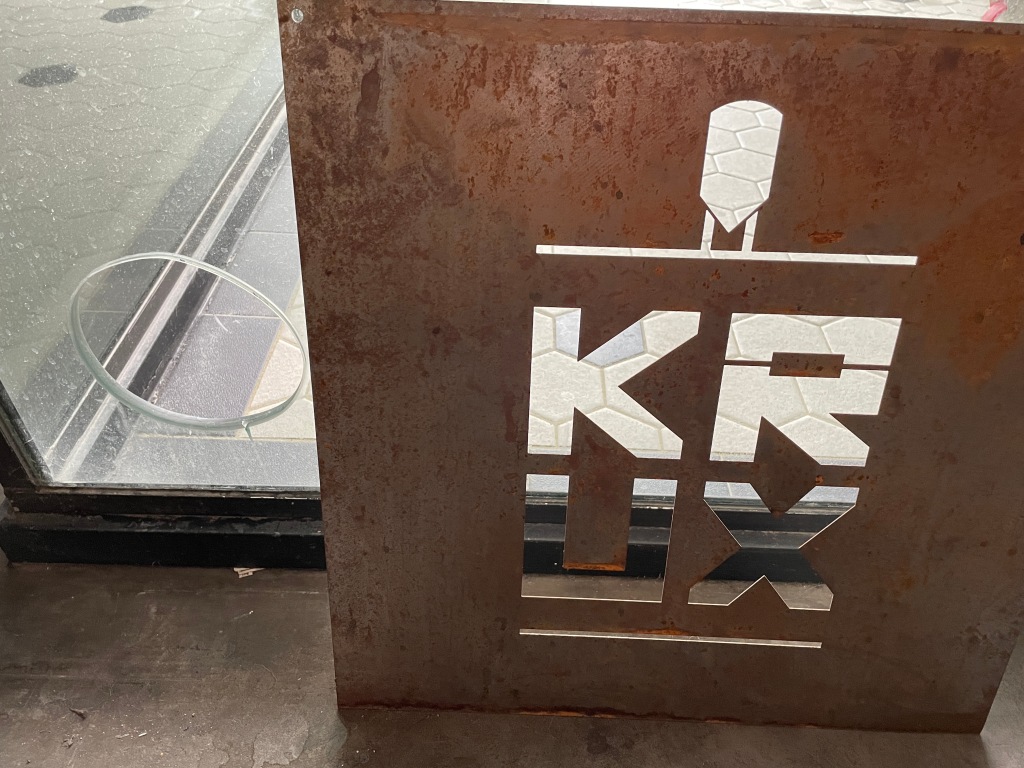
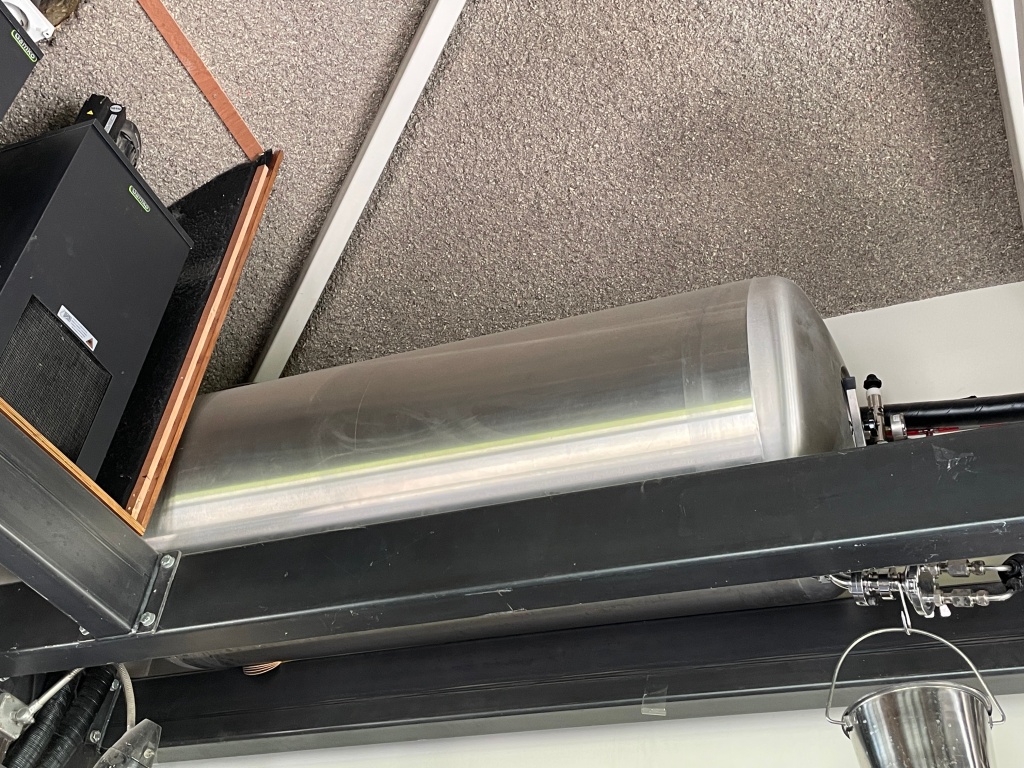
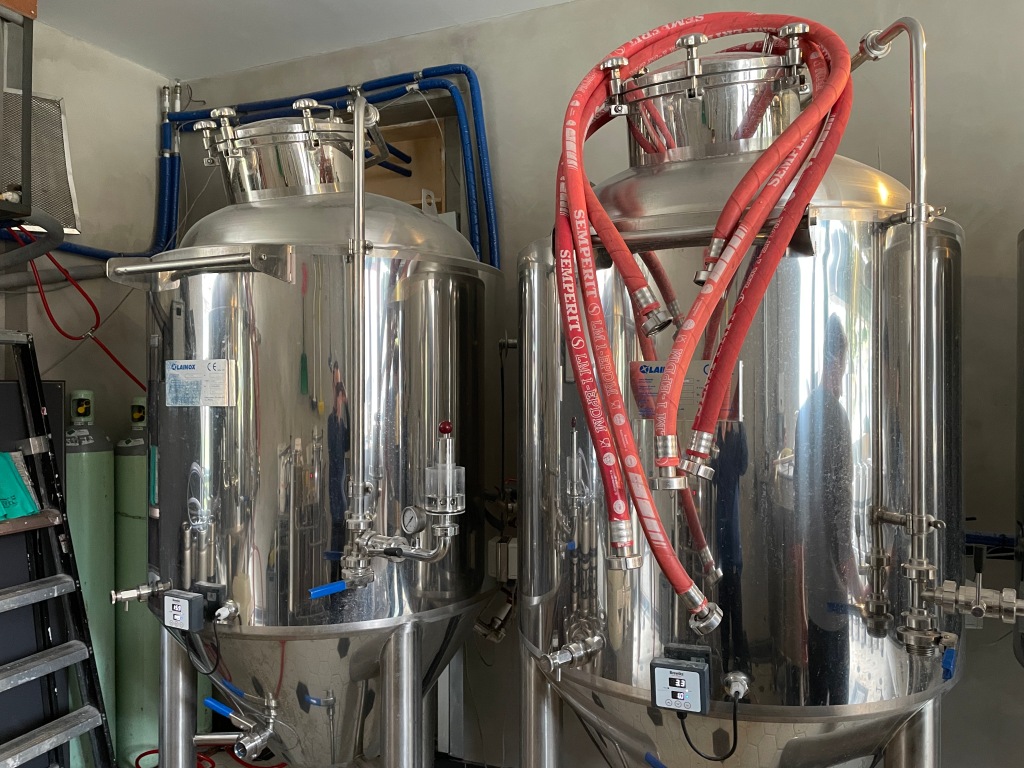
One for the brewery and the rest for the brewpub. The brewery is small with a capacity to make around 700-800 liters batches that all goes into kegs. Some brews go into bigger tanks on the ceiling, with space for 500 liters, and above the bar where beer is poured into directly from the brewery through a small hole in the wall. The rest goes into other kegs for the brewpub or other bars. Like Joost for example. Not surprising, the owner of Joost also owns part of Krux.

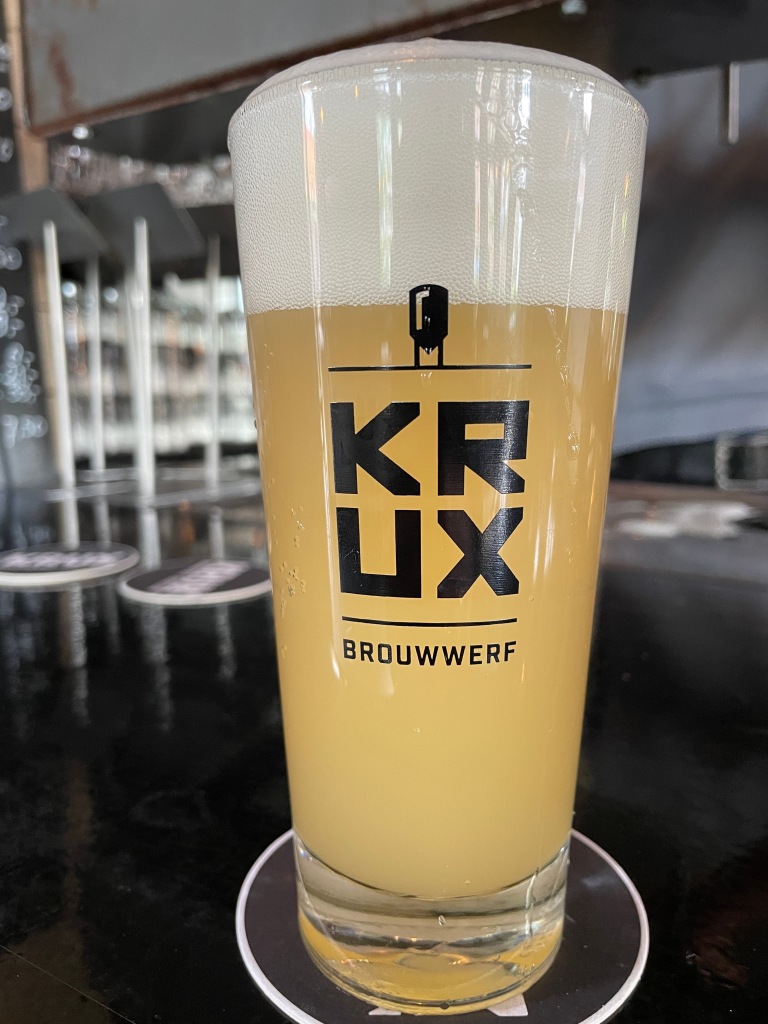
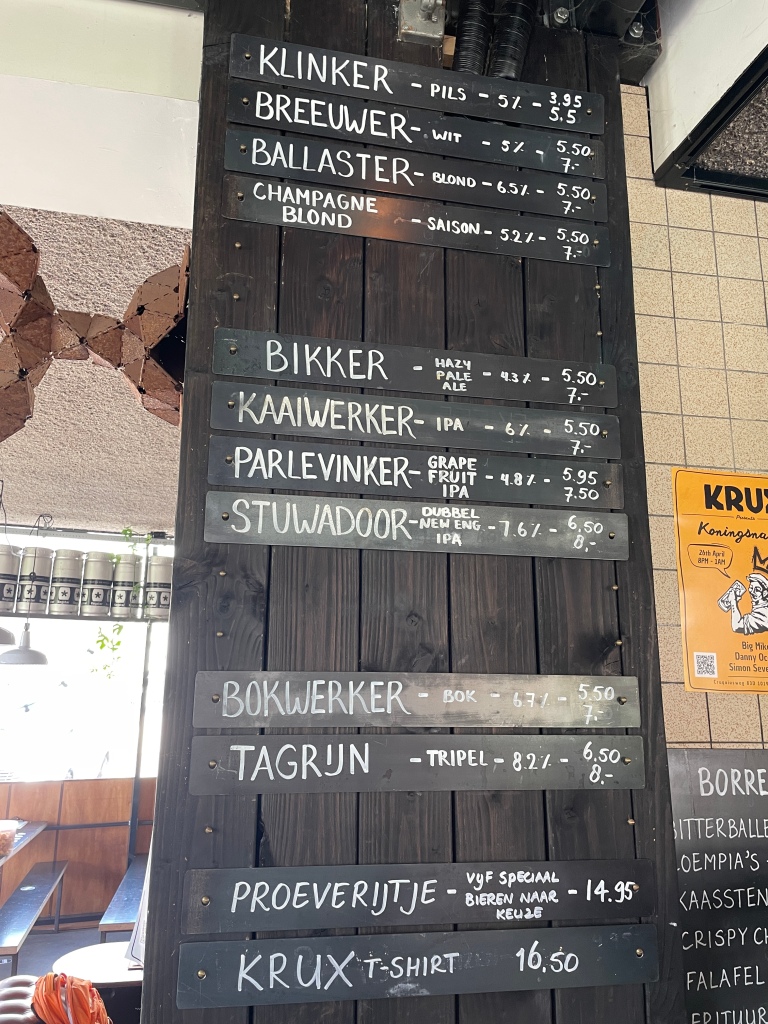
The beers have names that have something to do with professions concerning ships. Names like Stuwadoor (Stewart), Klinker (Riveter) and Breeuwer (Caulker). The beers are all well balanced with a percentage that is not too high, with some exceptions like the tripel. What this means is that there is a beer for everyone. A beer for the not too adventurous regular beer drinker who likes their tripel or blond. But also for the more adventurous beergeek who will try the grapefruit IPA or New England IPA.
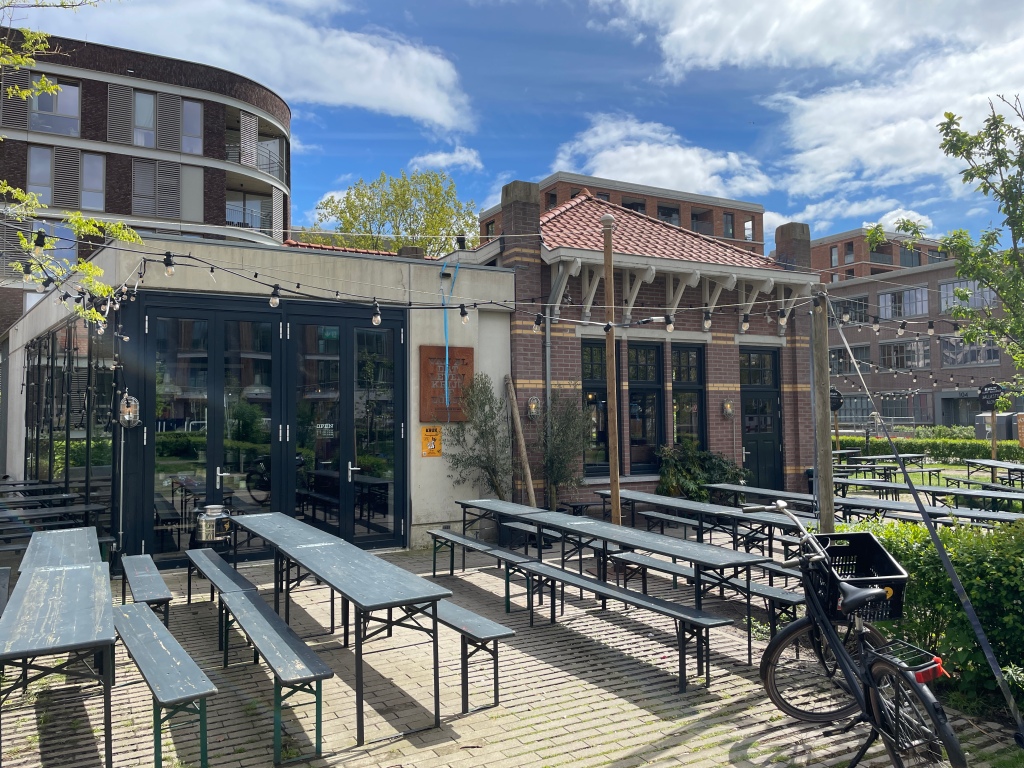
The inside of the bar is fairly small but can still fit around 80 to a 100 people on a quiz night. But the outside is huge with plenty of space to sit and drink beer or eat some of the food they offer. The children can play while their parents drink.

The vibe in the brewpub is very Amsterdam, more than other beer places I would say. The accents are Amsterdam, Ajax games or shown on a screen and most of the music while I was there was Dutch with a tendency towards Amsterdam folk music. Think André Hazes if you are Dutch. As someone with Amsterdam roots and who has lived here for over a decade it felt a bit like home. A home that is not yet overrun with tourists who read this about place in their Lonely Planet Guide. Or on some English language blog about Dutch beer.

So if you ever want to drink good, locally-produced beer in Amsterdam but want to stay away from the usual places, head on over to Krux for yet another unique Amsterdam beer experience. It may be too late in a few years.

Visit the website of Krux Brewery here.
Gooische Bierbrouwerij, a winged chihuahua taking on the world

Last week Gooische Bierbrouwerij won the award for best beer of the Netherlands with their excellent Schwarzbier. I have been a fan of this brewery and especially this beer for a very long time. I wrote this article a long time ago in 2012 for the blog Dutch Beer Pages. Now 12 years later I am glad to post it again. Things have changed a lot since then. They now have their own brewery in the middle of Hilversum and have expanded with different styles as well. They make great grape ales for example.

Hilversum: Holland’s Hollywood. The center of Dutch media and part of ‘t Gooi, a region of about 15 miles east of Amsterdam and a region that makes the rest of the country think of wealth. Mansions for the elite in a landscape of beautiful forestlands, lakes and golf courses. Not exactly the surrounding you would expect a brewery would flourish, but the Gooische Bierbrouwerij is attempting to do just that. ’t Gooi hardly has a brewing history, the small ones that once existed have folded. Let’s hope this one will last.

The logo of the Gooische is a winged Chihuahua. While looking for an animal that fit ‘t Gooi all the animals (fox, badger, rabbit, sheep) were already taken by other breweries. The Chihuahua is a typical animal for the rich people in ‘t Gooi. It also fits the identity of the brewery: small but ready to take on the world. The wings give it a mythical twist.

Class

I wrote before about Duits & Lauret and the class they show in their logo and website. The same can be said about the Gooische Brewery. It is a website that, as brewer Gijs tells us, also tries to convey how they look at beer: a beautiful and honest product. The style and attention might not be such a surprise if you know that three of the four people behind the brewery are designers, the fourth a history teacher. And they are serious about the brewery, considering it not only a hobby but also a second job.

Beer as wine.

In their eyes beer is a product that can be used like wine or next to it. Often brewers tell me, why do people give bottles of wine as a present and not a bottle of beer? Why is wine served at dinner and not beer? Gooische is trying to become a beer with the status of wine. The first beer I tried from Gooische was a Schwarz, not a style a brewery usually starts with. It is however a favorite style of the brewers, who have a preference for black beers, porters, stouts and German or Czech schwarzbeers. It is also a good accompaniment to food. So it was natural to brew a Schwarz brewer Gijs tells me. Besides the Schwarz and the blond they made a new beer: a white where the wheat has been replaced by (of course) buckwheat. Fall will bring a chestnut beer with locally picked chestnuts. New beers might come in the future, but the main focus is on continuing the present beerline. There isn’t an actual brewery in Hilversum yet, only the testbrews are made there <strong>Buckwheat</strong> Gooische tries to use as many regional ingredients as possible. Het Gooi is mainly peat and sand. Barley and wheat does not exactly flourish in this part of the country. One of the crops that was traditionally grown was buckwheat, a crop so important that two of the local counties have buckwheat in their shield. After some investigation it turned out that using buckwheat as starch worked as well and it made barleymalt an important ingredient, and it adds a soft touch and a beautiful head. Gooisch’ aim is to make a local product, made close to the source and the consumer. Easier logistics, lower energy costs etc. There are hardly any local products but there is a market for them and Gooisch is trying to fill that demand.

Staff Wanted

A stroll through a shopping street or an alley full of restaurants. Windows that half of the time have a sign behind it. The tape that holds it on the glass has started to turn yellow. The notice on the sign: Help Wanted.

And this is just two streets in one city. Go anywhere in the country and it will look the same. Of the many problems bars and restaurants are facing, the search for personnel has been a problem ever since the end of corona. An abundance of staff during the covid shutdowns turned into a lack.

Many people working in the service industry were laid off during the covid times because there was simply no work for them. No one was allowed to dine in and even with takeout you could do with just one or two cooks in the kitchen. Some stayed behind to deliver some orders, most sought employment elsewhere. Many turned to the national health service. They needed people to man the  phonelines when people called for a covid test, or to make an vaccination appointment. Or they could work at the vaccination centers helping people find their way.

And then the lockdown ended and people returned to the bars. The staff did not.

Owners had no choice but to step behind the bar again themselves or work even longer hours in the shop. A slight cold or a corona scare meant closing the bar or shop for a few days with no one to take over. Others opened later or closed earlier so to not get too overworked. Some even closed for one entire day a week. A day that could have been profitable became a day of no income.

And in some instances it has unfortunately led to permanent closings. And with that we are losing small parts of Dutch beer culture.

The public seems ok with that part. Going somewhere but then finding the doors are closed is not uncommon, but we learn to live with it. And if you are sitting somewhere it can mean that your food or drinks might turn up a little later than it otherwise would have.

Seeking new staff is hard. Pay gets better but still isn’t great. And restaurants and bars have started to resort to hiring non-Dutch speaking staff. Better someone than no one.

But staff is just one problem. With towering energy prices and increasing prices for everything because of inflation we still have a long way to go. We will see more businesses fold in the coming months. And that is a shame.

If you are looking for work in the beer industry, check out our list of available jobs.

A Day at Oudaen

On warm sunny days the Oudegracht is as busy as a mall the day before Christmas. Tourists in and on boats, yachts, water bikes, canoes, surfboards. Anything that can float on water and pass underneath the many bridges.

It is never boring when I stand outside waiting to give a brewery tour at Oudaen. The canals in Utrecht runs a few meters below street level. But where in other cities there is only water and a street above, Utrecht has a canal and a terrace next to it, leading to the doors of over 700 cellars. Four meters above me people walk on the streets with their shopping bags, on their way to eat something.

On a nice warm day people sit outside on both levels. Staff walks around bringing beers, other drinks and food. Inside in the huge grand café it can at times be empty when it’s nice out, but around dinner time people pour in for dinner. Five tasting glasses with different Oudaen beers on a wooden paddle are served at different tables. The waiters offer a short description of a dubbel, or explain what hops are used in the special summer ale.

In a small separate room a group of young women enjoy a high tea surrounded by pink balloons. One wears a tiara. A few levels up a group is enjoying a dinner after finishing a conference in the theater room. It’s much better than the members of stag parties staggering from a party barge into the restaurant, slurrily asking to use the bathroom. An unfortunate byproduct of these warm sunny days.

And I look up. The ‘city castle’ that is Oudaen towers over its neighbors. It had done so for almost 750 years. Back then a member of the wealthy and influential Zoudenbalch family also looked up and envisioned a fortified house for his family. A house showing their wealth, but also defending them from other important families in Utrecht. After the Zoudenbalchs other families moved in, until it became a house for the elderly, which it stayed until well into the 20th century. Since the 80’s it is what it is today. A grand café/restaurant with in the basement one of the oldest craft breweries in the country.

A brewery that started in 1990, which makes it one of the oldest ones still operational. They started with the then newer Belgian styles like wit, tripel and dubbel. In the decades since beer tastes changed, styles came and often went away again. Yet beer drinkers have always found their way to the castle on the canal and the beers brewed in the cellar. They did so in the early nineties, they do so in 2022.

And this is what I tell the guests. History of the building, what beer is, how beer is made it. Anything you can expect from a brewery tour. I can do brewery tours all over the country. But standing in front of the copper kettles in the basement of a 750 year old building, looking out over a busy canal in one of the Netherlands’ nicest cities… nothing beats that.

Website Oudaen

Brewery Tours at Oudaen

Back to the Beer Festival, Part II

Most of you reading this have visited a beer festival, though it might have been a few years. You  remember the stands, the breweries, the other visitors and the many beers you had. And that one person you had a fascinating conversation with sitting next to you on a wooden bench.

The last article was about my visit to a festival. The second day of that festival, the start of the Dutch beer week, I was on the other side of the table working for Oudaen tapping beers instead of drinking them. I thought it would be interesting for those who never worked at a festival to explain what it is like from the other side.

The stages of a festival

Stage 1

The stage before the festival opens. At the brewery you pack your taps and the kegs of beer you want to pour. You get all the marketing stuff you can get. Signs, flags, coasters, leaflets, T-shirts, bottles etc. Anything that stands out. Then you get in the car or van and leave for the festival. If you are unlucky this can be on the other side of the country.

When you arrive you put up your stand, connect the taps, decorate the stand and talk to the organizers, who undoubtedly have some things to say about how things will work and who you have to talk to if there are problems or questions. If you are early you have some time to kill to talk to the other brewers there. If you were smart enough to bring a trolley other brewers will ask you if they can borrow it. They can, you’re at the festival with likeminded spirits, not competitors.

Stage 2

The festival opens. Guests trickle in. The first hour or so hardly anyone visits your stand. Not good for business but it does give you time to talk to the guests about your beer or a brewpub if you have it. The beer they get at your stand is likely their first, so they often start with a lighter one. A special group that often visits are the collectors. They ask you if you have beer labels, bottle caps or coasters for them. A tote bag hangs over their shoulder filled with anything collectable they have hoarded in the first thirty minutes. At their often advanced age this is their highlight of the festival. They seem dorky at times, but they perform a function as guardians of beer culture and history. Treat them accordingly.

Stage 3

Most people are now at the festival. Peak hours. Chances are you are constantly pouring and with any luck there is a line forming in front of your stand. No time to explain things about the beer, hopefully people have made a decision before ordering. Hard work but the most satisfying part of the day. The atmosphere is changing too. A mix of beer festival veterans and newbies. The true festival goers know how to restrain themselves while still trying new beers. The newbies might come back to your stand because they like one beer in particular.

This is usually around dinnertime. Good festivals have a separate part of the terrain or venue for food. If things are really busy you can often trade a few beers with food from one of the food stands. But a separate room is the best. You have time to eat and to calm down. And oh, in these times of changing attitudes towards food festivals should always offer a vegetarian option. In Den Haag you had to stand in line with the other guests which took ages, only to find out your coupon didn’t provide for a vegetarian meal.

Stage 4

The last part of the day. That time when the beers people get at your stand are definitely not the first. There is more crowd noise. Some men for no reason start shouting and for a minute you think you are at a football game. You hear the sound of breaking glass more often, usually followed by a load roar from anyone who heard. A roar that then gets picked up by everyone and rolls over the terrain or through the venue as a wave.

This is the time drunkenness start and when it at times can get annoying. The line is held up by drunken indecisiveness or a minute long repetition of what beers they liked. If that beer is one of yours doesn’t really matter. They day is over. The organizers come by and tell you at what time exactly the taps close and not a minute later to not getting into any permit trouble. When you close the taps and can’t serve anymore there are always some who complain, but it is over.  

Stage 5

Cleanup and the long road home. Or if you decide to stay over an after party until the early hours of the next day. If you do go home you clean. You get rid of all the excess water, wipe down the table and taps. You also clean the taps and lines, the sooner the better to limit the risk of infections.

A long day is over. But there is always a new festival soon.

Back to a Beer Festival, Part I

Remember the days before corona? Full bars, beer flowing everywhere and a beer festival every day of the weekend. But 2020 and 2021 were quiet years. The few festivals that were held were often non-social affairs where you bought your beer through QR-codes and where social distancing limited good conversation. This, and getting corona, meant that I stayed away from them altogether. The only festival I was at was in Leeuwarden where I was behind the taps helping Oproer.  

With corona at the moment not a thing on the forefront of our minds I was able to visit a beer festival again. I went to the start of the Dutch Beer Week, kicking off with a festival in the Grote Kerk in Den Haag. I had the privilege of being at the festival for two days. The first day as a regular visitor walking around the church. The second behind that taps manning the Oudaen Brewery stand. Part 2 will be about that experience.  

The festival for the Dutch Beer Week started off with the announcement of the best beer of the Netherlands. In the weeks before the Dutch Beer Challenge was held with gold medal winners in different styles. Of all the gold medal winners one beer was chosen as beer of the year. In this case the blonde by Maallust, the Weldoener.

What is nice about this festival is that it is one of the few that offers stands by both big breweries like Heineken or Grolsch but also tiny ones like Hans and Grietje or Eiber. It was a good showcase of what you can find among the over 900 breweries in the Netherlands today.

It is not an easy festival to be on. Apart from the bigger breweries it is first come first serve, so many breweries you’d think would be there were not. But there was enough variety. I read somewhere that there were over 100 different styles available.

I won’t give you an entire rundown of which breweries were present and what they brought. The liver can only take so much. I do want to briefly mention three beers that surprised me in a positive way.

Two Chefs Prague Nights

As you probably know if you have been following me is that I have a thing about ‘simple’ German and Czech style beers. Two Chefs made a Czech Dark Lager called Prague Nights which was more than palatable. More please.

Avereest Klungel

This is a kuyt beer. A predominantly Dutch beer style that has seen some revivals this century, though it has died down somewhat. Only a few breweries make decent version. I was happy to see Avereest brought one. Even if it wasn’t a good beer, it was quite nice actually, just the fact of making one and bringing it deserves praise. But besides this they also brought a dubbel and some beers with rye and wheat. And I love rye. I only had two of their beers, but I will seek them out more.

Haagse Broeder

This brewery is the one I was looking forward to. A brewery with actual monks in the center of The Hague. Their beers are not the easiest to get and if you do find them they are not cheap. But I had heard tales of their excellent beers and was happy to see them on the festival. I was not disappointed. Their Patmos, a red ale with rye, was excellent and I can’t wait to try more.

This is what is nice about beer festivals. You can come into contact with beers that you have never tried without losing a lot of money on an entire bottle. And you can get to know some new breweries you had never had beers from.

Next week more about my experiences behind the taps.

Go here for more festivals in the Netherlands.

Bierverbond, uniting lager lovers

In a previous article I mentioned the rise of German (style) beers in the Netherlands. Bars like Café Brecht, Taverno Willi Becher and In de Wildeman are at the forefront in Amsterdam, while Boot 122 is serving great things in Utrecht. Occasionally a brewery here will brew a German style beer. Othmar has an almost perfect rauch and Amsterdam based Butcher’s Tears released a great Bavarian lager last year called the Fluiter, easily one of my favorite new beers of 2021. They are organizing a Czech lager festival in April too.

But the beer landscape in the Netherlands is still a desert when it comes to breweries who focus almost exclusively on bottom fermenting beers. One oasis in this desert is a brewery called Bierverbond, Beer Union. In a flood of Double Dry Hopped New England India Pale Ales and stouts featuring the entire pâtissier section of the supermarket, it is good to see some going into a completely different direction. 

Beginnings

Bierverbond is a two man team of Theo Verriet and Gert Hoff. Bierverbond is not (yet) their regular day job. Theo works at a bank doing IT four days a week. Gert used to work in IT as well owning several companies, but has sold all of them and retired early. His days are now filled with golf, grandchildren and beer.

It all started when Theo got a simple homebrewing kit from Dutch store Xenos. A first attempt led to  unexpectedly good results. Two further attempts however were not so successful and this put Theo onto a path of discovery figuring out where exactly in the process things went wrong. This search expanded his knowledge of brewing.  

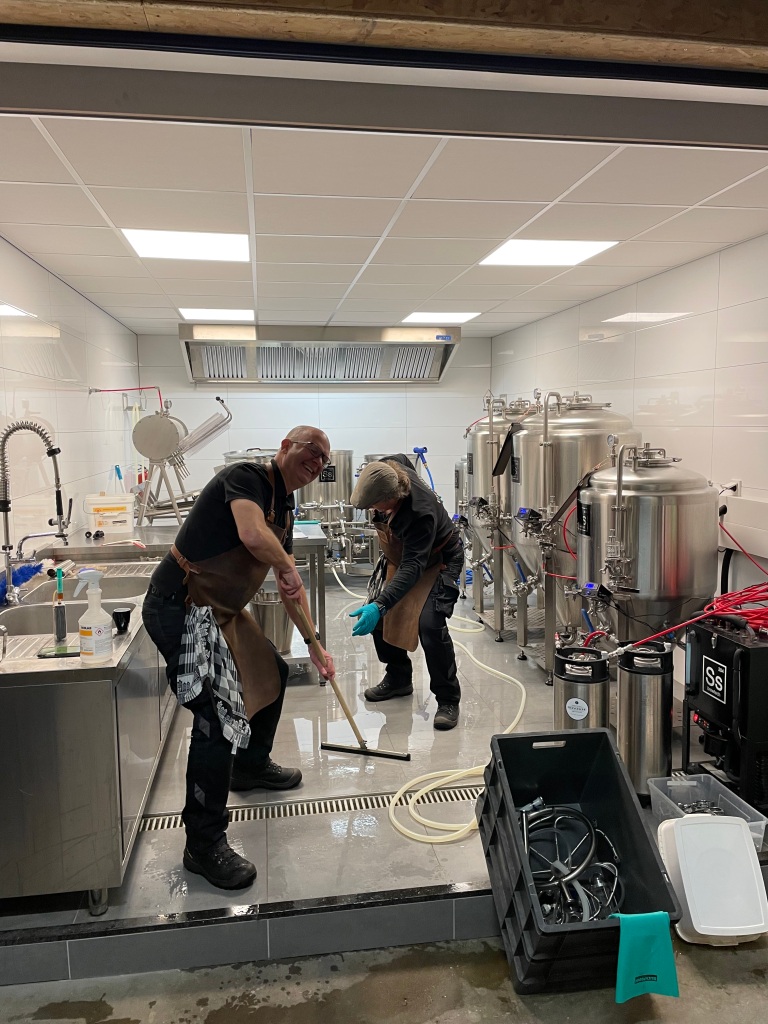
Theo (L) and Gert (R) hard at work. Brewing is mostly cleaning.

Theo and Gert are in fact brothers-in-law. At a family party they found out they both liked beer, and that they also liked the same styles and decided to work together brewing beer. Through the Amsterdam based homebrewers collective De Bierkaai they perfected their skills and started to commercially release their beers, starting with the New Amsterdam Pilsner.

In my years writing about beer I have met many IT-professionals turned brewer. According to Theo there are definitely comparisons between IT and brewing. If there is something not correct in a beer you go back into the process and try and figure out where the mistake was made. Just as you would in a computer program where if something doesn’t work you look for the bug, and try and correct it.

Their IT background returns in their embracing of open source systems. This means their recipes are no secret and anyone can use them. It also fits in with their Beer Union philosophy: beer unites people.

Professional brewing

Theo and Gert found a small space in Heemskerk and set up a brewery installation which is perfect for small batches. Their core range is brewed at Huttenkloas.

It also storage for their beers and some other local breweries. During Covid they had success selling their beer online and also helped  other breweries with webshop activities.

Some of Bierverbond’s beers

These styles and the others in their range are as I said rare here. That the beers are not some funny experiments can be seen in the number of awards that they have won so far. And not only for one of their beers, but for many of them. That they have not yet added a Dutch Beer Award to their cabinet of prizes is because they brew styles so uncommon here that there is no competition, and therefore not a fair contest.

Future plans

They have been working hard on a series of beers that will be released in April. A tour along six different German cities and their signature beers: Dortmund, Düsseldorf, Cologne/Köln, Weimar, München/Munich and Bamberg. The labels for the city themed beer have landmarks from those cities most people will recognize. The Allianz Arena and BMW HQ for Munich, the Gehry Buildings in Düsseldorf for example. They will be released in a good looking box so you can buy all at once.

I tried some of the beers on my visit and especially the rauch (Bamberg) was a very nice beer. I also liked the Baltic Porter which might be discontinued. The name of the beer, Vladimir, might have something to do with it.

There will be some restyling. The labels have always been tight and monochrome and this will stay. But now white on black instead of black on white. The XXX, the seal of Amsterdam, will be deleted too. O.K. if you are in Amsterdam but in other parts of the country often a reason not to drink it.

Release

The aforementioned German city box will be a released at Taverno Willi Becher on April 23. A fitting location. Let’s hope the beertypes they brew become more popular. So put away your cranberry banana cake orange stout and drink a schwarz by Bierverbond.

Bierverbond Website

Bierverbond on Facebook

Bierverbond on Instagram

While bars reopen, uncertainty remains

Last week Instagram and other social media were full of happy pictures again. Bars full of people , enjoying beer flowing from taps again. A beautiful sight after weeks of yet another shutdown.

A shutdown that was decreed by the government after another surge of positive Covid tests and the rise of the omicron variant, a strain that we didn’t completely comprehend yet in mid-December. And it wasn’t only bars. All venues that weren’t essential shut down. Only shops selling food were open. For once we had the strictest rules in Europe concerning Covid.

And then came the great news that omicron wasn’t nearly as dangerous as feared and that even though hundreds of thousands of people are getting infected, the number of hospital ICU beds with Covid patients was hardly rising. The newly installed government decided on opening up most of public life again, including the bars, albeit until 10 at night at the latest.

The reopening of bars is a much needed step to keep bars open and for breweries to have more places to sell their kegs. Both have had a tough time. Sure, there was government help and even though that covered most of it, some bars and breweries are on the brink of closing with some actually folding in 2021.

Good News, but…

The reopening of the bars won’t immediately save everyone and make all owners millionaires overnight. There are at least two issues that will have a long lasting effect.

Prices

As you are probably well aware if you live anywhere on this planet, inflation is high. Resources are more expensive. This includes all the ingredients like malt and hops, but also the water and fuel needed to brew beer. If you had to start a new contract in the latter part of 2021, the price of gas has increased. To combat this, breweries are forced to ask higher prices for their beer, and bar owners in turn have to raise theirs for the consumers. So getting a good glass of beer, already pricy, will get more expensive. And not only craft breweries, big breweries like Heineken are forced to do the same.

Staff

Another problem is the lack of staff. Some bars decided to let go of their staff in the last two years. Even with government help, keeping staff was a loss because the help didn’t completely compensate the labor costs.

The omicron variant is stirring up new problems. First of all some workers decided to seek employment elsewhere. Wages are often higher doing different work, and there is a labor shortage in almost every part of the economy.

Then there is the very high possibility of testing positive with this variant. Doesn’t mean you are at home and sick as a dog, but it does mean you cannot work for a few days and if a bar doesn’t have backup, it means shutting down. Another loss of income.

Breweries

The reopening is of course good news for breweries. The corona crisis for most breweries meant selling more bottles, but fillings kegs came with a risk. Because it was hard to forecast how corona would behave it happened often that bars and brewpubs closed again. Left were thousands of kegs. So much that some breweries had to dispose of thousands of liters of kegged beer because it was going to spoil. And a tank full of beer is a lot of potential income. Some came up with ideas of filling growlers, but this was never enough to make all the money back.

So even though it is a great thing that bars and breweries are back in business, the lack of staff and higher prices might still lead to rocky return to normal, if we ever get there.

2022 is going to be interesting, to say the least.