Uncover Amsterdam’s Local Beer Treasure: Krux Brewery

If you are a tourist in Amsterdam with your eyes set on visiting a brewery your first thoughts will likely go to the iconic windmill of ‘t IJ or maybe places like De Prael, Troost or even the Heineken brewery. But there are more interesting breweries to visit in Amsterdam, if you know where to look. So here is my first installment of “What else to drink in Amsterdam”, a look at some of the smaller, unknown breweries the capital has within its borders. Today we start off with a little gem in the far eastern part of Amsterdam: Krux.

Krux is located on Cruquis Island. Once it was part of the harbor, where big ships would dock and deliver their goods, often from Asia. The brewery is located at exactly such a site with a rich maritime and industrial history. But you wouldn’t know that immediately when you walk into the neighborhood.

Most of its industrial history has vanished, replaced by newer looking residential buildings. If you are lucky your apartment will overlook the last part of the water before it turns into the Ijsselmeer. Interesting, but not something unique these days in expanding cities.

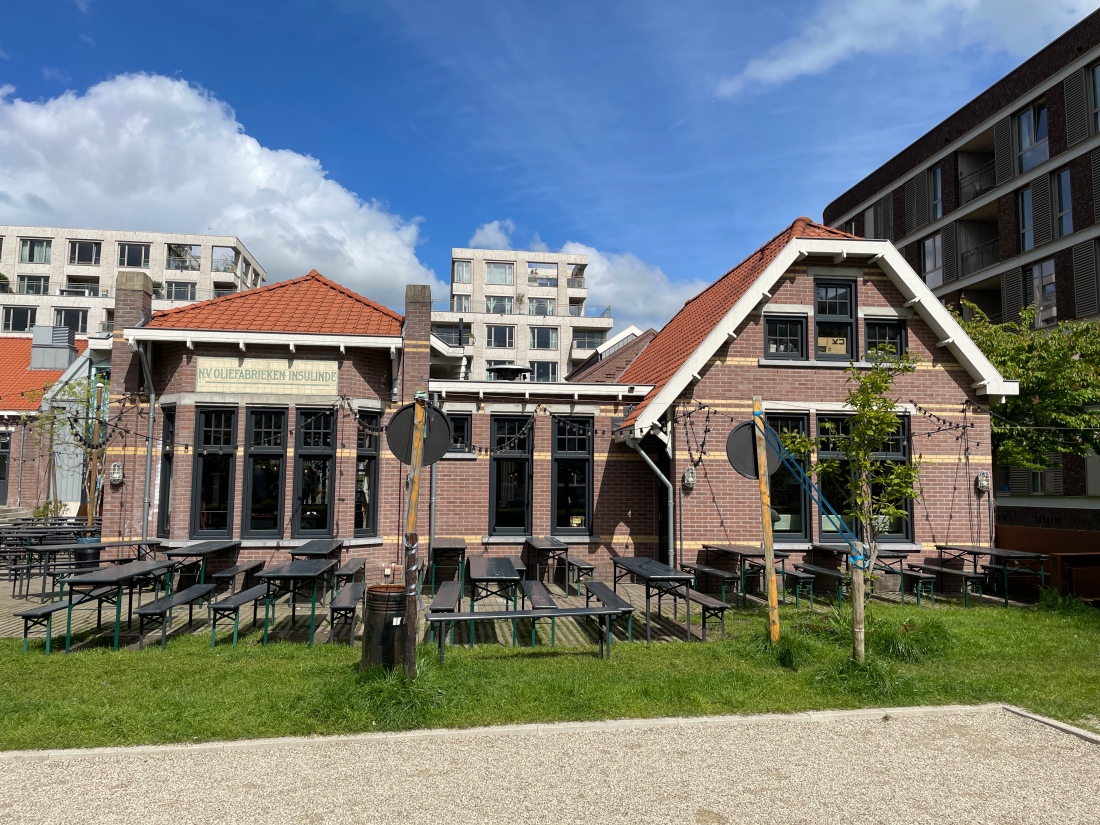
Yet in a courtyard of sorts stand three different buildings that are from another era. The early twentieth century as it turns out. They were buildings of a soap manufacturer. Coconut oil was brought in all the way from Indonesia and turned into ingredients, for margarine for example. This factory didn’t last long, when the owner died the company folded but the buildings remained.
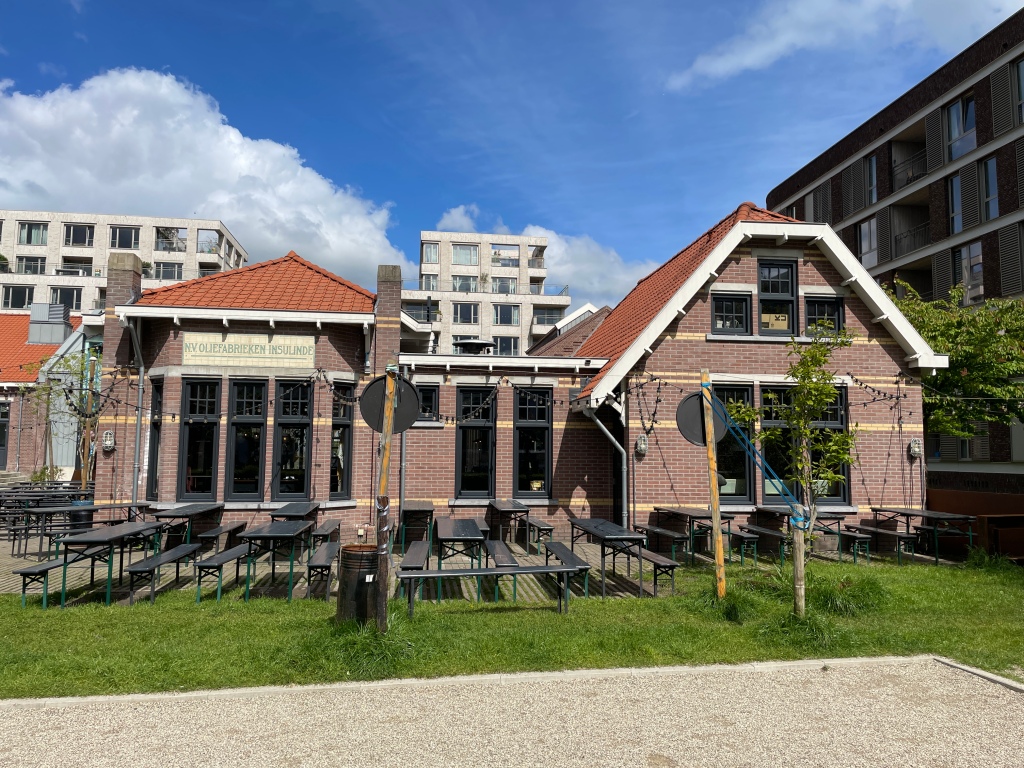
The house of the owner now houses the brewery and brewpub. Some might remember it as the home of the Bruut brewery once. A brewery that Ward, the brewer and part-owner, was once part of but that split into several new businesses, Krux being one of them. Ward also has a personal connection to Dutch brewing history. His onetime neighbor was Kasper Peterson who, with the money he made from penning a number one hit song (Drukwerk’s Je Loog Tegen Mij), decided to start a brewery. That brewery was ‘t IJ, located on the beginning of the island next to the now iconic windmill. But knowing a brewer wasn’t the only thing, Ward also learned to brew in several places, including a high profile brewing school in Gent, Belgium. It made him a technically very efficient brewer who can now use solid brewing techniques while making modern beers.

But back to the Krux building. The ground floor is split into two separate rooms.
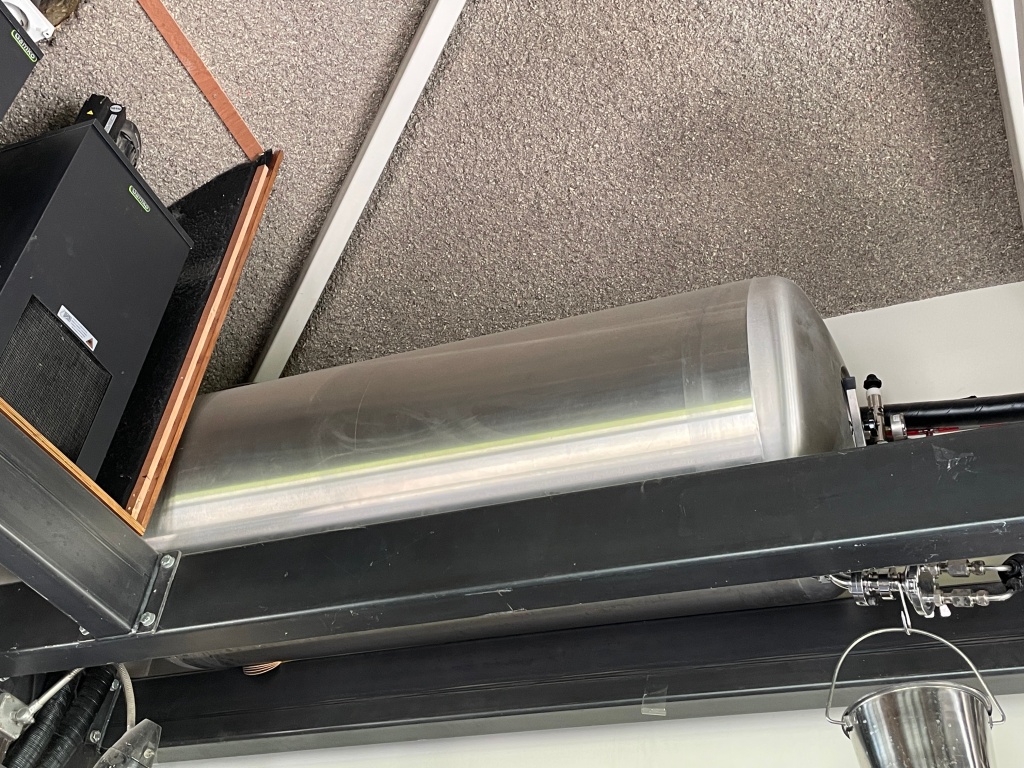
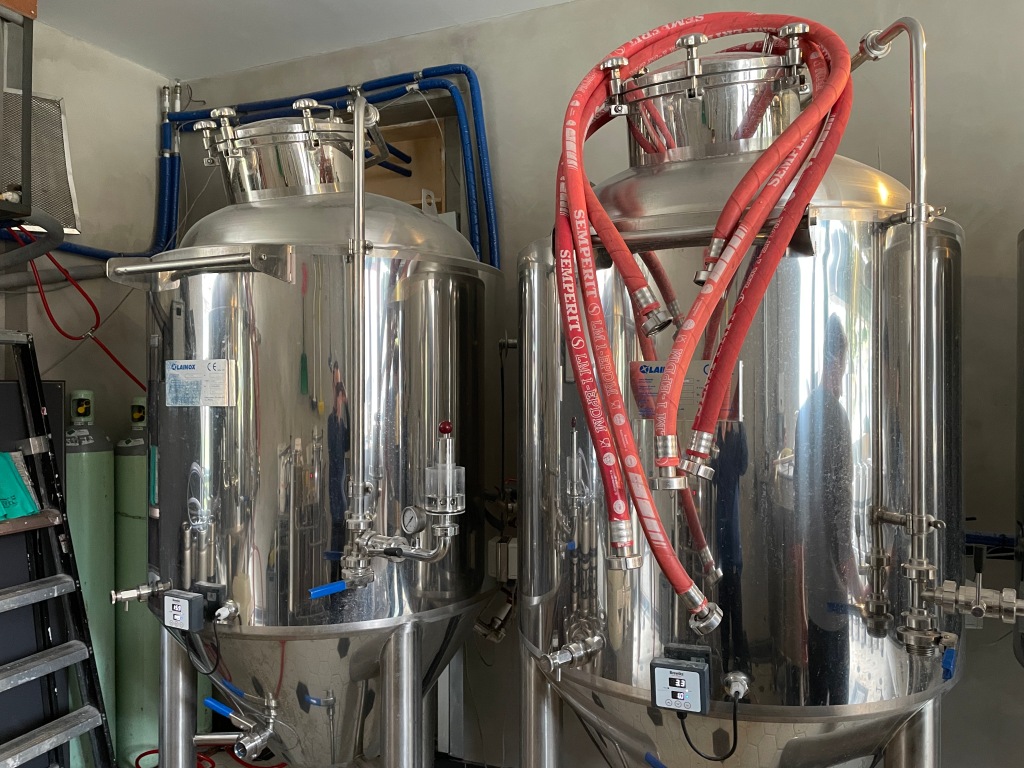
One for the brewery and the rest for the brewpub. The brewery is small with a capacity to make around 700-800 liters batches that all goes into kegs. Some brews go into bigger tanks on the ceiling, with space for 500 liters, and above the bar where beer is poured into directly from the brewery through a small hole in the wall. The rest goes into other kegs for the brewpub or other bars. Like Joost for example. Not surprising, the owner of Joost also owns part of Krux.

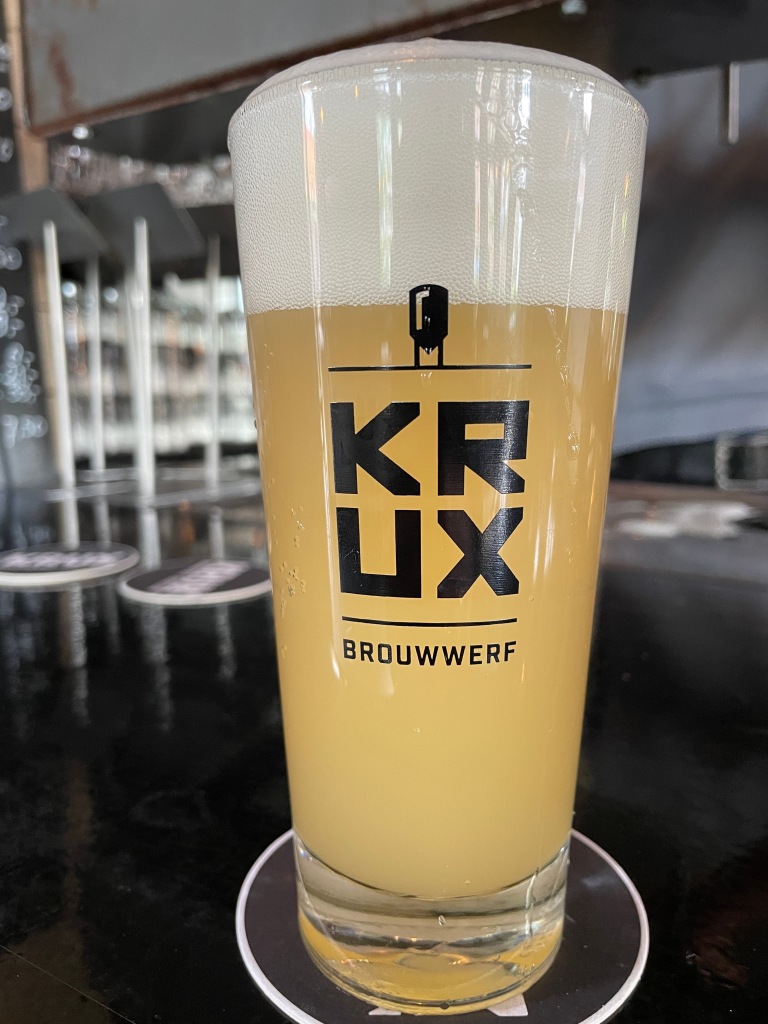
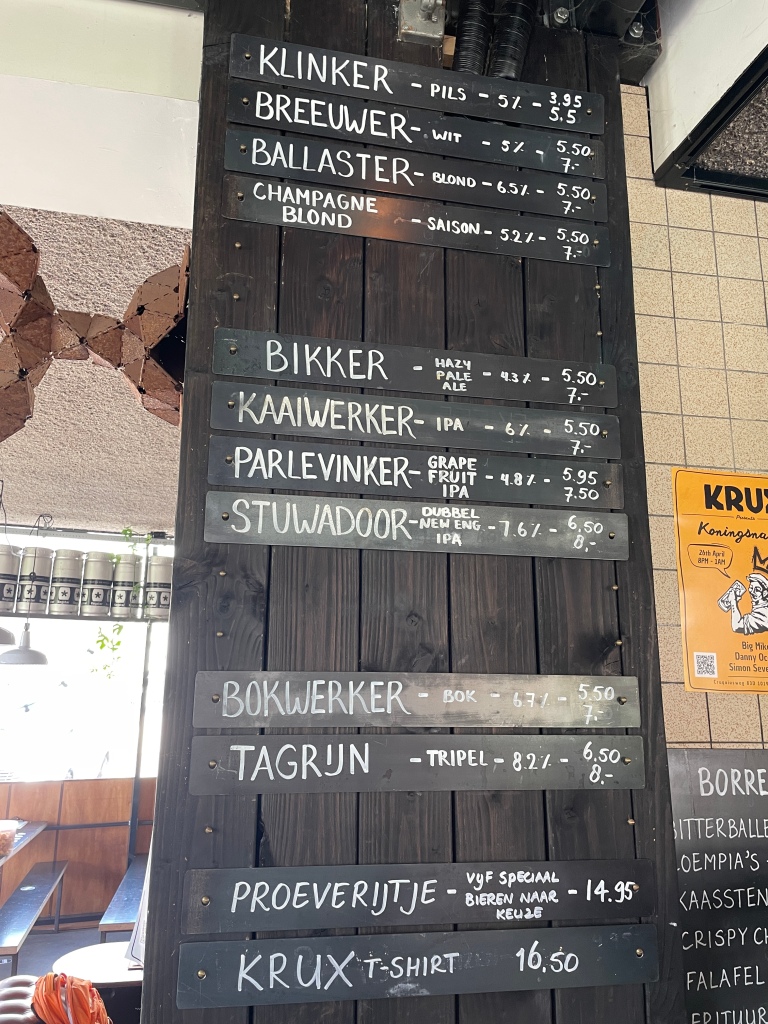
The beers have names that have something to do with professions concerning ships. Names like Stuwadoor (Stewart), Klinker (Riveter) and Breeuwer (Caulker). The beers are all well balanced with a percentage that is not too high, with some exceptions like the tripel. What this means is that there is a beer for everyone. A beer for the not too adventurous regular beer drinker who likes their tripel or blond. But also for the more adventurous beergeek who will try the grapefruit IPA or New England IPA.
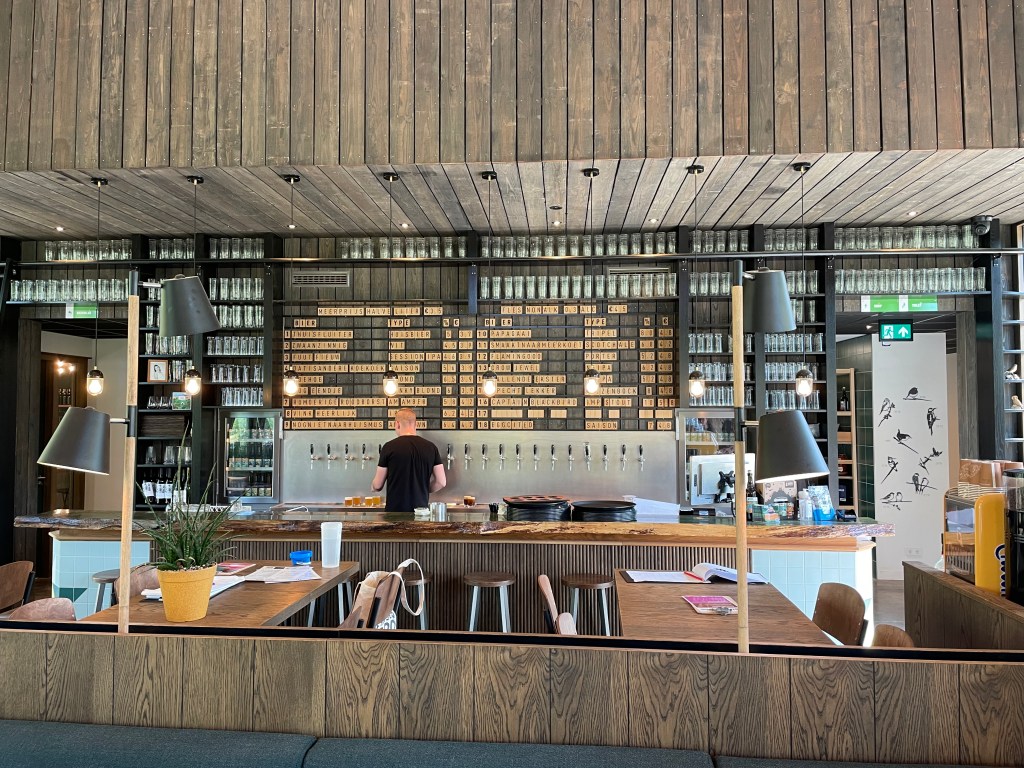
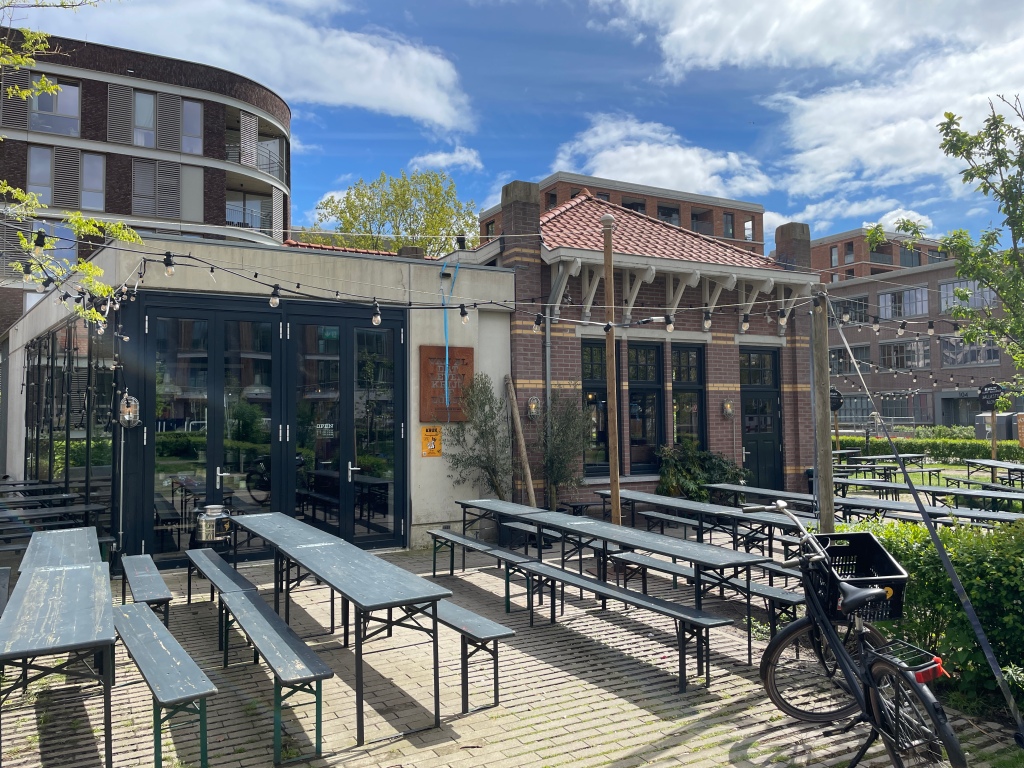
The inside of the bar is fairly small but can still fit around 80 to a 100 people on a quiz night. But the outside is huge with plenty of space to sit and drink beer or eat some of the food they offer. The children can play while their parents drink.

The vibe in the brewpub is very Amsterdam, more than other beer places I would say. The accents are Amsterdam, Ajax games or shown on a screen and most of the music while I was there was Dutch with a tendency towards Amsterdam folk music. Think André Hazes if you are Dutch. As someone with Amsterdam roots and who has lived here for over a decade it felt a bit like home. A home that is not yet overrun with tourists who read this about place in their Lonely Planet Guide. Or on some English language blog about Dutch beer.

So if you ever want to drink good, locally-produced beer in Amsterdam but want to stay away from the usual places, head on over to Krux for yet another unique Amsterdam beer experience. It may be too late in a few years.

Visit the website of Krux Brewery here.
Gooische Bierbrouwerij, a winged chihuahua taking on the world

Last week Gooische Bierbrouwerij won the award for best beer of the Netherlands with their excellent Schwarzbier. I have been a fan of this brewery and especially this beer for a very long time. I wrote this article a long time ago in 2012 for the blog Dutch Beer Pages. Now 12 years later I am glad to post it again. Things have changed a lot since then. They now have their own brewery in the middle of Hilversum and have expanded with different styles as well. They make great grape ales for example.

Hilversum: Holland’s Hollywood. The center of Dutch media and part of ‘t Gooi, a region of about 15 miles east of Amsterdam and a region that makes the rest of the country think of wealth. Mansions for the elite in a landscape of beautiful forestlands, lakes and golf courses. Not exactly the surrounding you would expect a brewery would flourish, but the Gooische Bierbrouwerij is attempting to do just that. ’t Gooi hardly has a brewing history, the small ones that once existed have folded. Let’s hope this one will last.

The logo of the Gooische is a winged Chihuahua. While looking for an animal that fit ‘t Gooi all the animals (fox, badger, rabbit, sheep) were already taken by other breweries. The Chihuahua is a typical animal for the rich people in ‘t Gooi. It also fits the identity of the brewery: small but ready to take on the world. The wings give it a mythical twist.

Class

I wrote before about Duits & Lauret and the class they show in their logo and website. The same can be said about the Gooische Brewery. It is a website that, as brewer Gijs tells us, also tries to convey how they look at beer: a beautiful and honest product. The style and attention might not be such a surprise if you know that three of the four people behind the brewery are designers, the fourth a history teacher. And they are serious about the brewery, considering it not only a hobby but also a second job.

Beer as wine.

In their eyes beer is a product that can be used like wine or next to it. Often brewers tell me, why do people give bottles of wine as a present and not a bottle of beer? Why is wine served at dinner and not beer? Gooische is trying to become a beer with the status of wine. The first beer I tried from Gooische was a Schwarz, not a style a brewery usually starts with. It is however a favorite style of the brewers, who have a preference for black beers, porters, stouts and German or Czech schwarzbeers. It is also a good accompaniment to food. So it was natural to brew a Schwarz brewer Gijs tells me. Besides the Schwarz and the blond they made a new beer: a white where the wheat has been replaced by (of course) buckwheat. Fall will bring a chestnut beer with locally picked chestnuts. New beers might come in the future, but the main focus is on continuing the present beerline. There isn’t an actual brewery in Hilversum yet, only the testbrews are made there <strong>Buckwheat</strong> Gooische tries to use as many regional ingredients as possible. Het Gooi is mainly peat and sand. Barley and wheat does not exactly flourish in this part of the country. One of the crops that was traditionally grown was buckwheat, a crop so important that two of the local counties have buckwheat in their shield. After some investigation it turned out that using buckwheat as starch worked as well and it made barleymalt an important ingredient, and it adds a soft touch and a beautiful head. Gooisch’ aim is to make a local product, made close to the source and the consumer. Easier logistics, lower energy costs etc. There are hardly any local products but there is a market for them and Gooisch is trying to fill that demand.

Bierverbond, uniting lager lovers

In a previous article I mentioned the rise of German (style) beers in the Netherlands. Bars like Café Brecht, Taverno Willi Becher and In de Wildeman are at the forefront in Amsterdam, while Boot 122 is serving great things in Utrecht. Occasionally a brewery here will brew a German style beer. Othmar has an almost perfect rauch and Amsterdam based Butcher’s Tears released a great Bavarian lager last year called the Fluiter, easily one of my favorite new beers of 2021. They are organizing a Czech lager festival in April too.

But the beer landscape in the Netherlands is still a desert when it comes to breweries who focus almost exclusively on bottom fermenting beers. One oasis in this desert is a brewery called Bierverbond, Beer Union. In a flood of Double Dry Hopped New England India Pale Ales and stouts featuring the entire pâtissier section of the supermarket, it is good to see some going into a completely different direction. 

Beginnings

Bierverbond is a two man team of Theo Verriet and Gert Hoff. Bierverbond is not (yet) their regular day job. Theo works at a bank doing IT four days a week. Gert used to work in IT as well owning several companies, but has sold all of them and retired early. His days are now filled with golf, grandchildren and beer.

It all started when Theo got a simple homebrewing kit from Dutch store Xenos. A first attempt led to  unexpectedly good results. Two further attempts however were not so successful and this put Theo onto a path of discovery figuring out where exactly in the process things went wrong. This search expanded his knowledge of brewing.  

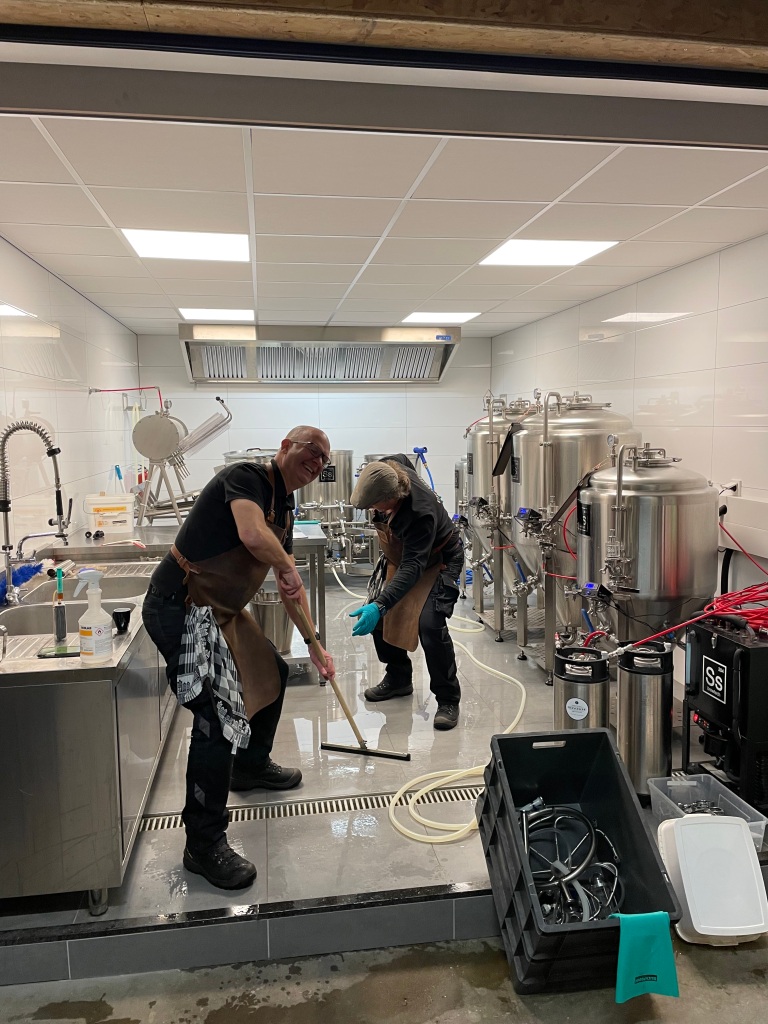
Theo (L) and Gert (R) hard at work. Brewing is mostly cleaning.

Theo and Gert are in fact brothers-in-law. At a family party they found out they both liked beer, and that they also liked the same styles and decided to work together brewing beer. Through the Amsterdam based homebrewers collective De Bierkaai they perfected their skills and started to commercially release their beers, starting with the New Amsterdam Pilsner.

In my years writing about beer I have met many IT-professionals turned brewer. According to Theo there are definitely comparisons between IT and brewing. If there is something not correct in a beer you go back into the process and try and figure out where the mistake was made. Just as you would in a computer program where if something doesn’t work you look for the bug, and try and correct it.

Their IT background returns in their embracing of open source systems. This means their recipes are no secret and anyone can use them. It also fits in with their Beer Union philosophy: beer unites people.

Professional brewing

Theo and Gert found a small space in Heemskerk and set up a brewery installation which is perfect for small batches. Their core range is brewed at Huttenkloas.

It also storage for their beers and some other local breweries. During Covid they had success selling their beer online and also helped  other breweries with webshop activities.

Some of Bierverbond’s beers

These styles and the others in their range are as I said rare here. That the beers are not some funny experiments can be seen in the number of awards that they have won so far. And not only for one of their beers, but for many of them. That they have not yet added a Dutch Beer Award to their cabinet of prizes is because they brew styles so uncommon here that there is no competition, and therefore not a fair contest.

Future plans

They have been working hard on a series of beers that will be released in April. A tour along six different German cities and their signature beers: Dortmund, Düsseldorf, Cologne/Köln, Weimar, München/Munich and Bamberg. The labels for the city themed beer have landmarks from those cities most people will recognize. The Allianz Arena and BMW HQ for Munich, the Gehry Buildings in Düsseldorf for example. They will be released in a good looking box so you can buy all at once.

I tried some of the beers on my visit and especially the rauch (Bamberg) was a very nice beer. I also liked the Baltic Porter which might be discontinued. The name of the beer, Vladimir, might have something to do with it.

There will be some restyling. The labels have always been tight and monochrome and this will stay. But now white on black instead of black on white. The XXX, the seal of Amsterdam, will be deleted too. O.K. if you are in Amsterdam but in other parts of the country often a reason not to drink it.

Release

The aforementioned German city box will be a released at Taverno Willi Becher on April 23. A fitting location. Let’s hope the beertypes they brew become more popular. So put away your cranberry banana cake orange stout and drink a schwarz by Bierverbond.

Bierverbond Website

Bierverbond on Facebook

Bierverbond on Instagram

Oproer: Rising from the Ashes

For several years the CAB building next to the Zuilen trainstation in Utrecht was a destination for (vegan) beer lovers. It was here that Oproer had their brewpub and vegan restaurant, doubling as a brewery in the first two years. A quick history lesson for those who don’t know: Oproer started as the combination of breweries Rooie Dop and Ruig. Since this fusion it has steadily been building a name for itself. The vegan restaurant won an award for best vegan restaurant in the country. When they started sending in beers to competitions, the beers also started winning prizes. Since a few years they started a sour program as well with great success. A kriek winning awards twice in a row at the Dutch Beer Challenge for example. But their Session IPA and Double Oatmeal Stout won as well, showing the wide range of what they can make.  

Things were going fine until the disasters.

First that one disaster that affected all of us. Oproer, like all bars and restaurants, had to close its doors after corona hit. They frantically set up a webshop to try and sell at least some bottles. And with great success, sales were better than expected. Over the summer the bar could open again. But with the regulations they could never be at full capacity.

Then the number of covid cases rose rapidly and they had to close. Again. And this time this also meant letting go of the entire staff.

And then another disaster hit.

On a Monday night in January a fire broke out in a wooden floor storage at the other side of the building. The fire was huge and the smoke went under the roof and ended up in the Oproer brewpub. Though nothing was burned or broken the smoke damage was so extensive that everything was useless, covered under a layer of poisonous soot. It was clear that it would be a very long time before anything could start here again.

But having their own place to serve these beers to the public is what they wanted the most. So the search commenced to find a new place. And they found one on the ground floor of a completely new structure in Utrecht Overvecht.

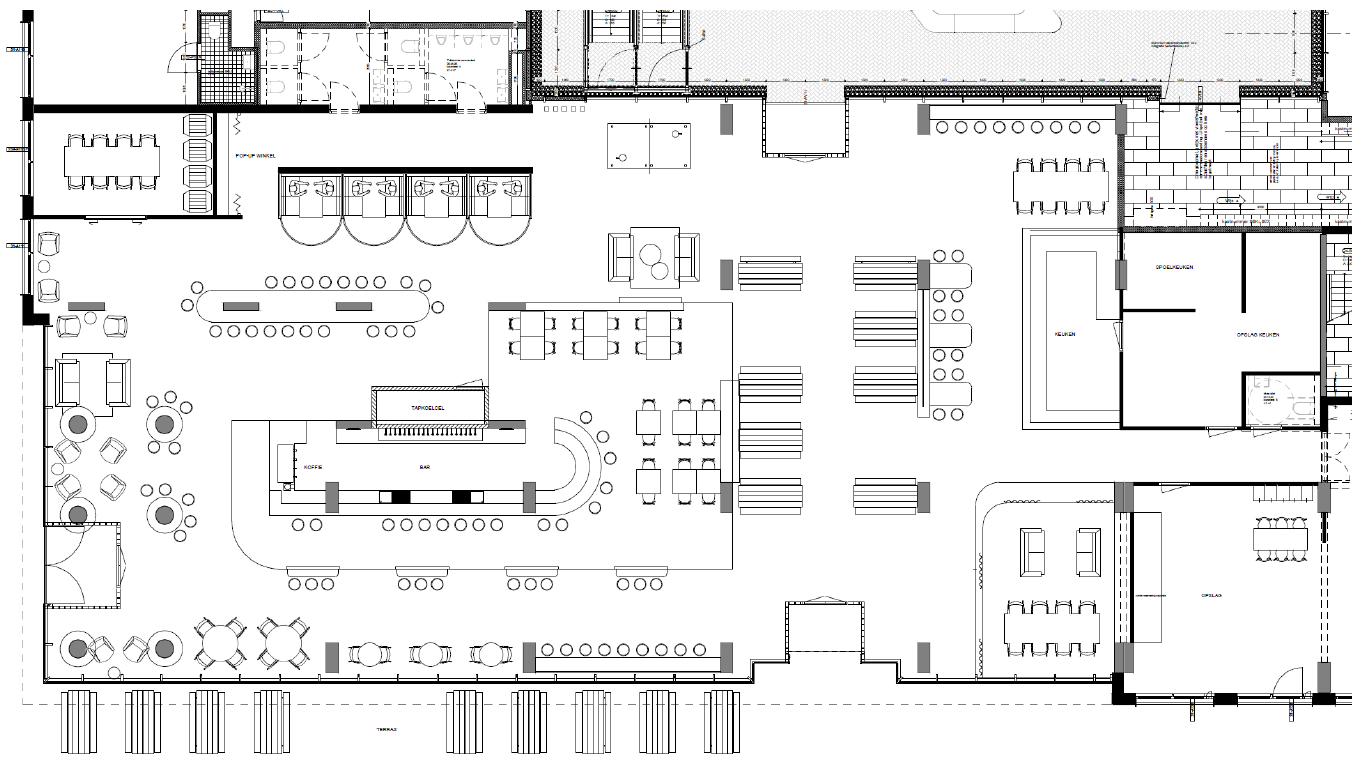
The new space is going to be vast, twice the size of the old pub and that was already roomy. Beer is supposed to flow out of 20 taps. Above them are hundreds of apartments are planned. Downtown Utrecht is only about 10/15 minutes away. The Overvecht Trainstation is also relatively close.

They have been socially and environmentally conscious from the start. This will come back in the beercafé. Most of the construction materials inside will be from recycled materials. And because the room has several areas different designers can make something.

It has to be more of a beercafé than the old place ever was. A big bar in the middle of the room and a lot of sitting and standing places to enjoy a cool Refuse/Resist or sour Kriek. Different sections will have different looks, as to not make it too much of a colossal space but with things to explore.

It is a completely new and bare structure. Even the electricity cables and watermains have to be installed. Because they don’t have a few hundred thousand euros lying around and insurance only covers a small part after the fire, they opted to try the often used method of crowdfunding. On October 6th the reached the goal of € 300.000 for the new bar. They are now looking for an additional € 75.000 to improve and expand the brewery. So if you want to help out with the Oproer resurrection go to their page at CrowdAboutNow.

The plan now is that they will get the key to the new place in October. With any luck the bar can open around February 2022.  

Oproer needs to continue being the presence that they were in the Utrecht beer scene, and the new beercafé is just that. I myself can’t wait to see what it will be like in 2022.

The plans for the new Oproer Beer Café

Fort Everdingen up and running

For three days in the middle of August I attended a summer course to hopefully become a Beer Ambassador. The summer school was held at Fort Everdingen, now the home of the brewery Duits & Lauret. The last time I was here was almost 8 years ago on a slightly cold and somewhat rainy November day. My wife and I walked over the site of Fort Everdingen looking at old 19th century structures and sheds. It sometimes looked closer to collapsing than becoming usable again.

We were invited by Marco Lauret and Danielle Duits to come take a look at what was to be the site of their brewery and tasting room. You can read more about this in the previous article about how it all came to be.

Things have changed. The campground is now up and running: caravans, tents, campervans, there is space for all kinds of camping. And with some much grass and woods around it feels like you are out in nature. How nice is it to wake up, take a short stroll and look out over wide Dutch rivers.

The sheds and structures that looked somewhat downtrodden and had water standing in them have all been rebuilt. One houses a room for classes like the one I took, while the main structure is now both brewery and tasting room. The brewery is somewhat cramped and they can only fill kegs for consumption in bars and a few meters away in the tasting room. Most of the stone structures, the actual fort are still mostly in the same state. It is a monument after all.

The brewery also means they can be more experimental than before. Duits & Lauret is known for a selection of very good, well-balanced and award winning beers. Having your own tasting room means you can try more things and put it on in the tasting room. During the course we were treated to a great schwarz called Swarte Kray (Black Crow) and what I guess we can call a double schwarz in collaboration with De Leckere. But if dark beers are not your thing there you can go even more German with a kölsch or/and an alt. Another example of how brewers are starting to look eastwards across the border for beer inspiration?

When you decide to visit and you are not going by bike there are several routes to get there. By far the best one however is along the river by bike, or better yet on foot along the river. There is 19th century history, World War II history and an impressive number of birds and other animals. It might take two hours to walk this way, but the beer will feel even more refreshing. A faster way is to rent a  bike and cycle over the dyke. I felt like a true Dutch boy taking this route and getting rained on along the way. Brouwdok in Harlingen has a great view over the sea, but Fort Everdingen’s location next to the rivers that made Holland what it is, is equally stunning. And what better to enjoy that part of Dutch life with world class beer.

A Visit to… House of Bird

A visit to….. House of Bird

Summer is around and the corona-obstacles visiting places are disappearing. Time to visit a spot that had been on my wishlist for over a year: The House of Bird, the tasting room for Bird Brewery.

The House of Bird opened last year, but unfortunately the corona crisis hampered them in the beginning. The location is great: the entrance of the Diemerbos. A forest that was planted in the 1990s as a green space for the growing towns/neighborhoods of Diemen and the Bijlmer. It has attracted a lot of birdlife since and birdwatchers trek to this place to spot interesting birds.

You can also spot different birds here that come in glasses and are potable. Bird Brewery has been hard at work building their brand, a good example of how both smart marketing and good beer created a well-known brewery. You can find their beers with the colorful labels and the funny names in many bars and restaurants, but also in the supermarket. Unfortunately the names only make sense to Dutch speakers, but if you like dad jokes and puns you will like their names. Ok, for the Dutch speakers reading this here are a few: Datisanderekoekoek, Nog Eendje, Datsmaaktnaar Meerkoet.

Bird Brewery beers are never outlandish but all tasty and well made, this fits perfectly with the House of Bird. It attracts different people: from people heading into or out of the park, families with children and tourists who enjoy beer. Even if you did not come for the beer there are plenty of other nice things to drink and eat. When you sit down you can scan a QR code and the menu will pop up on your phone and you can order online and pay for it immediately. There are homemade ice teas and lemonade for example that are worth a try if you want something else than beer.

The food is equally interesting and diverse. There is everything from salads to burgers to pizzas. Our table was filled with fries, salmon flammkuchen, grilled vegetables and vegan blueberry pie. Something for everyone.

And all of this in or around a beautiful, mostly wooden structure that fits perfectly in the woods. The House of Bird and the land around it is worth a family trip. For the kids there is enough to do around the restaurants and for them there is enough to eat and drink.

You need to make somewhat of an effort to reach the Diemerbos, but it is worth the trip and spend a few hours in the House of Bird and the Diemerbos.

Links: Bird Brewery, House of Bird

Brouwerij Stijl: Pioneering in Almere

Almere is not the first city you would think of when it comes to beer. Though close to Amsterdam it mainly consists of residential, suburban areas. In a country of century-old cities, Almere is an outlier. A city no one in this country really wants to visit.

Yet I decided to make the trip to visit one of the few breweries in Almere: Brouwerij Stijl. I first met Raymond of Brouwerij Stijl (Style Brewery) when pouring at a beer festival. The beer was good but what most intrigued me was where they were from.

De Blauwe Reiger

I met with Anneke, the other half of the married couple that is Brouwerij Stijl, at their Bierlab. The Bierlab is located in a building with many more tiny creative businesses. There were woodworkers, people working on boats, a food truck, an artist working with iron and more. It also houses a small theatre.

Also part of the building, called de Blauw Reiger (Blue Heron) is an institution that provides care and activities for people who need help because of a handicap. It gives the area an atmosphere of collaboration for people who have qualities than can help others.

Bierlab

Stijl’s Brewlab is located in a hallway that also houses their storage. Their 8 core range beers are therefor brewed at other breweries. They use the Bierlab to experiment with new beers. During my visit I got a taste of a Black IPA. The batches are very small but interesting. They sell the bottles to beergeeks in Almere who will have to make the trek to the industrial zone where they are located, but they happily do so. Think of beers like a Dark Rye Saison, a Grisette, an Imperial Orange Stout or Loganberry Black Barley Wine.

Raymond works teaching new air traffic controllers and Anneke takes care of their two children, besides doing a lot of work for the brewery. They are taking things slow, but there are plans for their installation. We will of course let you know about these plans as they evolve.

Their beers and ingredients

Anneke and Raymond have a shared love for the U.S.A., a country they have been numerous times already. Their beers are also influenced by, but not limited to, this country. Their best known beer is the Ally (the nickname of Almere) Pale Ale, a beer made in collaboration with local professional football team Almere City FC. They have won national awards for their excellent Russian Imperial Stout.

Other beers in their 8 beer core range are a pinetop blonde, a Dubbel and a pilsner. Stijl uses many different ingredients in their beers and hardly ever stick to the usual four. For a saison they made for the Zuiderzeemuseum in Enkhuizen they used beets and carrots from a local farmer. The beer has a strange color because of these vegetables but be assured, it’s not some weird berry milkshake stout. Their pilsner is made with local malt made from locally (Flevoland) grown grains and hops. It is a truly local beer in that way.

Circular

This focus on local produce runs through everything they do. A few articles ago we wrote about Pieke Brood Bier and how they use leftover bread in their brews. Stijl does the same for every beer they brew, no matter what the style. When it is a brewday they load up the car with as much bread as they can and drive to the brewery where they brew that day. They have good contacts with a local bakery who saves bread in the freezer for them. The spent grain in turn is being made into bread again. Not too far from the Bierlab the cultivate some different varieties hop plants that have been used in the beer. Same for locally grown herbs. Flevoland, the province Almere is in, might be very new but it is a perfect breeding ground for produce, especially for hops apparently.

Almere

The city they live in was a big part of the conversation. Both are from the South and Anneke studied anthropology and has a keen insight in how the city behaves.

If you are not from around here let me explain to you what Almere is. In a country where most cities are at least 600 years old and some date from Roman times ,Almere is young. Incredibly young. Some of you reading this would have been adults already when the first house was inhabited in 1976. The city was build on the created land in the former Zuiderzee, now IJsselmeer. Almere was founded near Amsterdam and many families from the capital moved here for bigger, cheaper housing that was still close to work. Ever since the city has grown with new neighborhoods up to now where it is now the 6th biggest city in the country. And that it only 45 years.

But for its size and number of inhabitants, specialty beer culture in Almere is virtually non-existent. It is a city of immigrant families from all over the country. First it was people coming from Amsterdam, later it attracted people from all over the country and even from abroad. It can be conceived to be a miniature America. It has given Almere a feel that is different from most other cities, a newer city that is still trying to discover who it is.

Like other newer cities in the country (Hoofddorp for example) it seems hard to start some sort of beer culture. Beer stores fail and there are no classic bars and restaurants that serve locally made specialty beer. In fact most restaurants are of the all-you-can-eat type with no room for anything special.

Future

Let’s hope that Almere keeps growing in the right direction to provide a good garden for a craft beer culture to grow in. The city of Almere isn’t the most flexile when it comes to helping, so that might provide an extra challenge. Anneke and Raymond, beer pioneers in Almere, will be ready for it with Brouwerij Stijl.

Useful Waste: Pieke Brood Bier

In 2020 worldnews was dominated by corona and its effects on society. The beer world was hit hard with bars and brewpubs closing in large parts of the world for a long time.

But there is a darker cloud that hangs over everything: our rapidly warming earth. A lot of things that we humans do are destroying the earth: gas powered cars, flying all over when a train will do, eating too much meat, cutting down forests… I can go on for a while. If the rest of the world would live like we do here in the West, we would need three earths worth of resources.

The beer world is trying to do their part by becoming more sustainable. Solar energy on the brewery, energy sufficient equipment, better produced ingredients and distribution with electric trucks are just a few examples. The grain left over after mashing often goes to animals who will eat the still very nutritious stuff. Sometimes bakers bake bread with the grain. Anything better then throwing it away in the trash.

In the Netherlands some breweries have started interesting projects to become more sustainable. Projects that deserve more attention. Attention I want to give them in a series about people in the Dutch beer world trying to do their part. In episode 1: Pieke Brood Bier. I spoke to founder Laura Nieboer about this interesting concept.

Who are they?

Pieke Brood Bier (Pieke Bread Beer) is part of the start-up Innowastion, a company trying to ‘give waste value’. Innowastion was started by Laura Nieboer after graduating from Maastricht University. Maastricht is where they are also based. It is now a three woman team with the addition of Karlijn and Joanna.

Waste Beer?

So how do they do fight waste with beer? Laura:

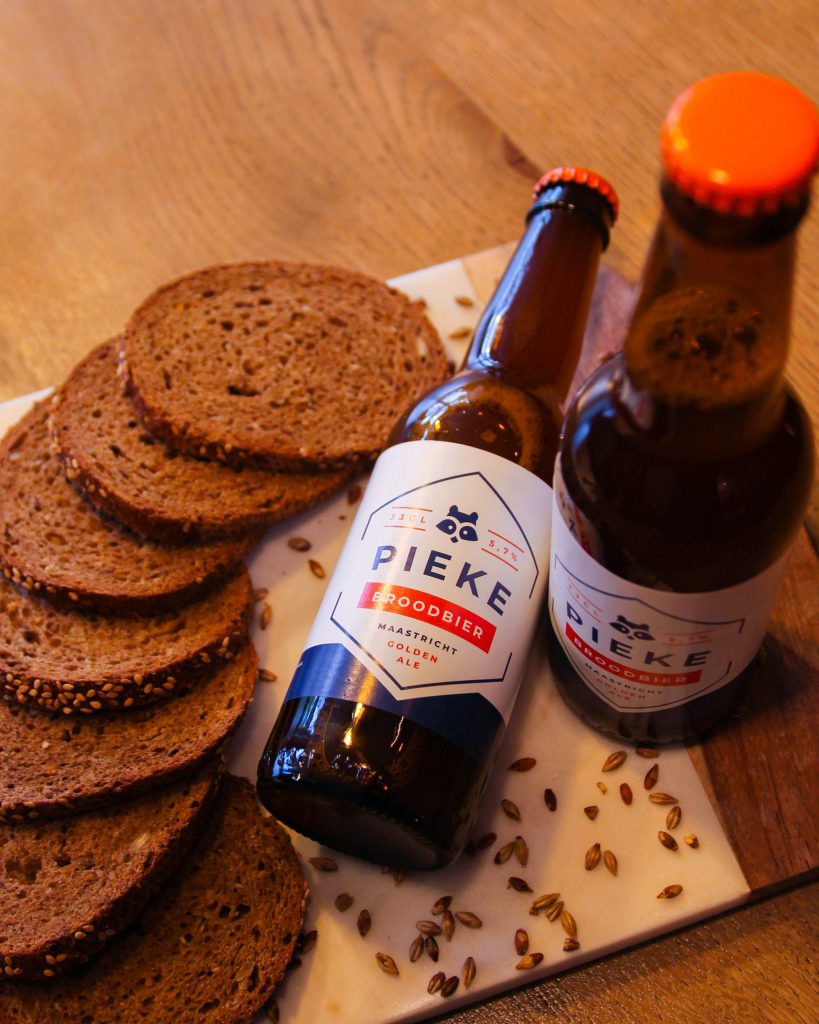
“It all started early 2018 when I realized how much bread we throw away in the Netherlands. We throw away around 12 whole loaves of bread per person per year. Knowing that so many people worldwide struggle to get (good) food I felt shocked by this statistic. As bread has a short shelf life due to its high water content, there are not many things you can do with bread. I wanted to show people the potential of food ‘waste’ beyond the obvious, such as making croutons or breadcrumbs out of it. Somehow, I made the connection between bread and beer, which was the start of the Pieke Broodbier adventure.“

“A friend and the internet taught me how to brew beer at home. After testing many batches, we finally had a nice beer. Taking a bit of a risk I decided it was time to brew it commercially at a local brewery here in Maastricht. We started with a batch of 300 litres, but soon due to its almost immediate success, we scaled up to 600 litres and later to the 1000 litres batches that we currently run.“

2020 saw the release of two batches of 1000 liter. They plan to brew at least that much in 2021 with maybe one batch more. If the bars can open again soon there is more chance of this.

Bread

Whenever they brew, at nearby Fontein brewery, they collect bread that would otherwise have been thrown away. Because of the many types of bread that they pick up every batch of Pieke Brood bier is slightly different every time. But this is something they know is part of the experience and adds a little extra. The beer as it is currently can best be described as a blonde beer or a golden ale.

Where to get it

For now Pieke Broodbier is for sale in some local (Maastricht) shops, bars and restaurants. They also supply three local markets every week. These markets are a good way to have direct contact with fans and customers: “An observation I can share from interacting with people at markets is that especially older males think our beer is not dark enough for their taste haha. They generally ask us why we brew an ale and not something stronger. Overall, the reactions we get are positive especially if people realise the positive impact they are making by buying and drinking Pieke Broodbier. “

Future

Development continues on new beers and drinks. They are this year working on a new types of beers, often in collaboration with other parties. So who knows , this year we might see a new Piekebrood beer.

But Innowastion won’t focus on beer alone. The plan is to introduce new drinks made with waste this year. This has led to a name change. It is now Pieke Drinks, Pieke Broodbier will remain the name of the beer. So keep checking their social media channels for more.

She is not far enough yet to have Innowastion be a fulltime job. When it was founded she was still working on her masters, which she got at the end of 2020. Innowastion has not attracted investors or government help yet. They did win a Maastricht Student Entrepreneur Award in 2018 and got help from a business coach to set things up. But for now it is all own money. The profit from the first batch financed the second and so Pieke Brood Bier can be made.

The dream is that in the coming years Innowastion can be full-time activity. But as with many startups, the finance will have to come first.

So whenever you are in Maastricht seek out this wonderful initiative. We all need to do our part to combat the climate crisis, and why not enjoy a beer in the process?

Links:

Innowastion Website.

Piekedrinks.

Pieke BroodBier on Facebook.

And on Instagram.

Buying Beer Online

Buying Beer Online

Corona has changed the way we consume. Beer is no different. Bars are not open as long as before and many of us have opted to drink more beer at home.

The shops have remained open so we were always able to get our beer. However for those living outside of the bigger cities, like me, it has been harder. I am fortunate that I have an excellent beer store in the tiny 5000 people village I live in, that’s De Zwart in case you are interested. Without a car and not wanting to lug around heavy bags of bottles I decided to order beer online.

I randomly picked 7 different stores, all small and independent. Of the shops six were from the Netherlands, and I bought beer from the U.K. on one occasion.

At first I thought I would review all the stores separately. But I am sticking to some points that I noticed or have made me thing about the whole process. And let’s say some things might need to change if the independent stores want to fight Beerwulf (Heineken) or Hopt (InBev).

The stores I have bought beer from were Bierloods22 in Woerden, Sterk in Amsterdam, Little Beer Shop in Utrecht, Just In Beer in Groningen, Lekker Bier Bier Winkel in Friesland, Specialbierpakket in Leiden and from the United Kingdom Premier Hop.

Here are some of the things that caught my eye:

Personal Touch

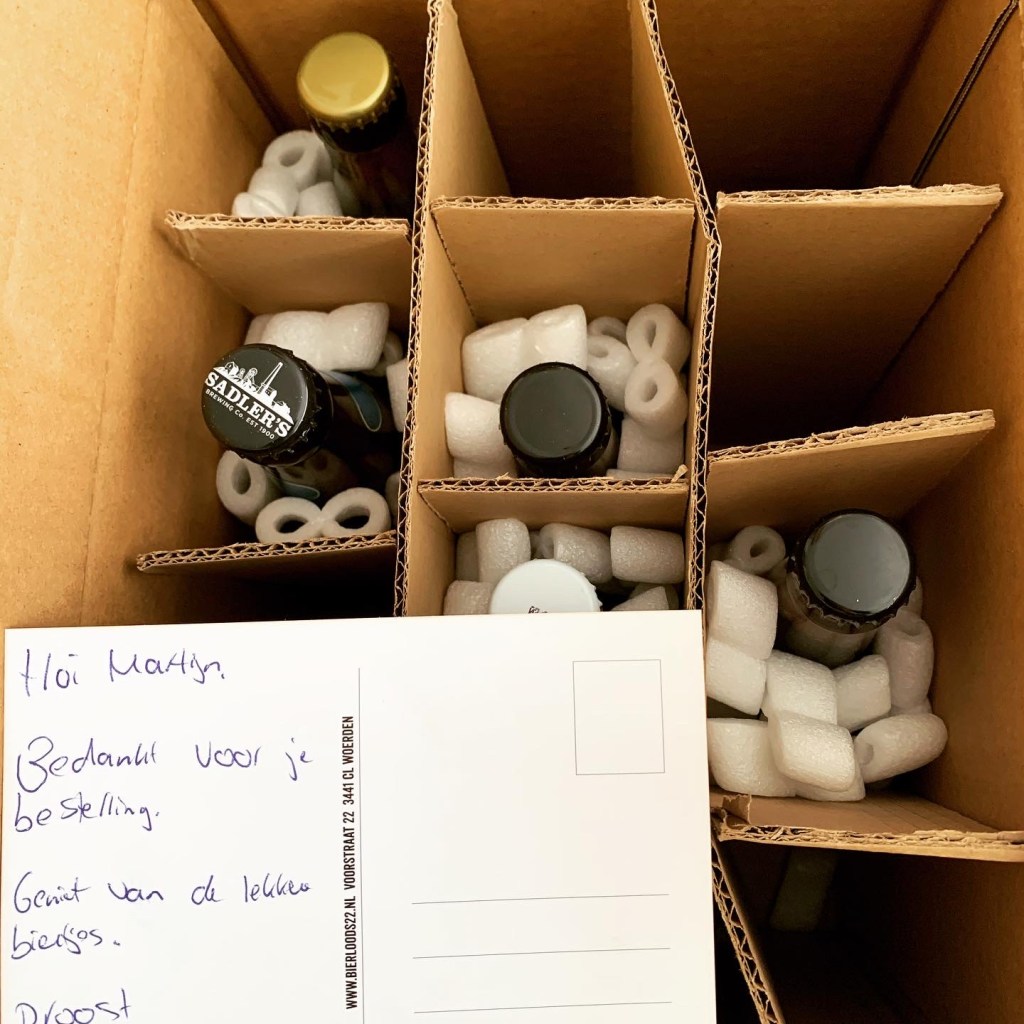
With the box of beer I ordered beer from Bierloods22 in Woerden came a postcard with a  handwritten note. It might be a small thing but it means they took some time to do so. It also had my name on it so you know they wrote it on the spot. It makes you feel appreciated as a customer.

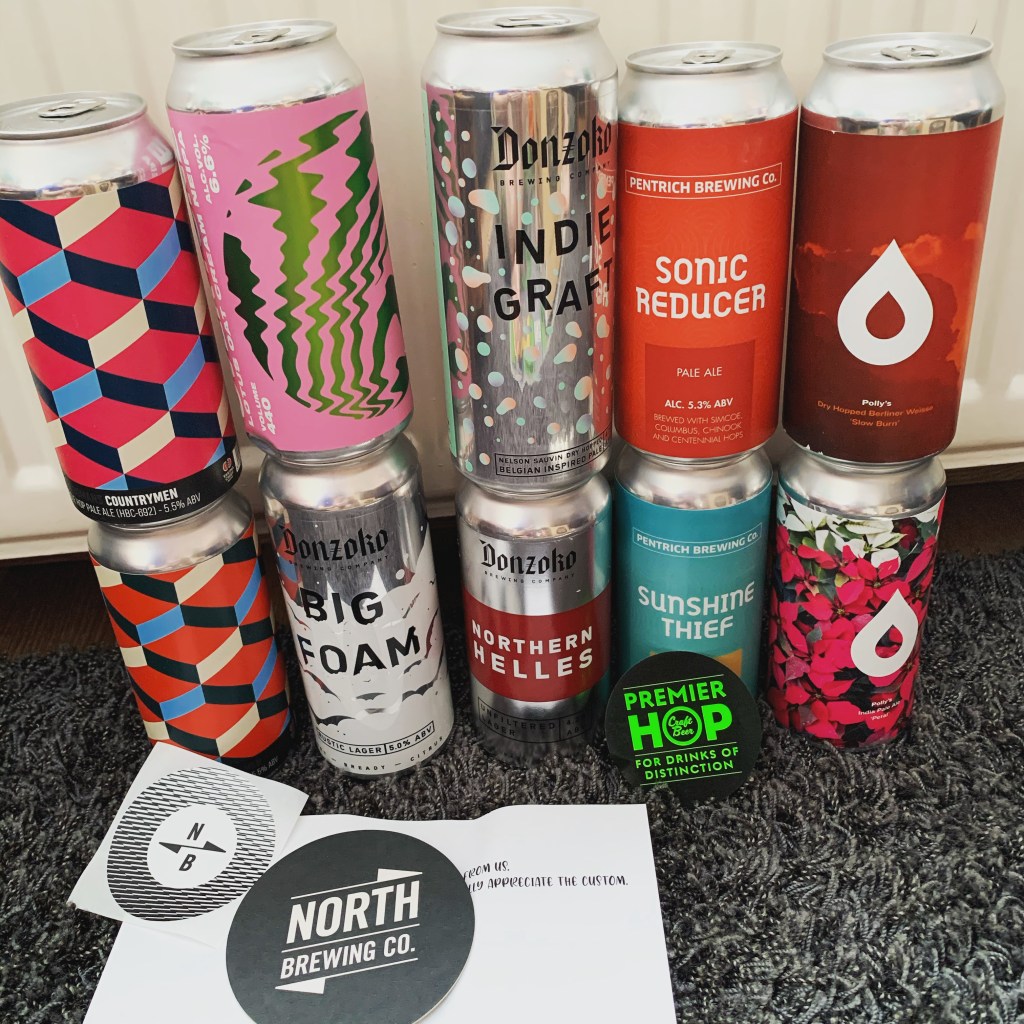
Another personal touch is letting your customer know that the delivery will be delayed. Premier Hop, the only UK store I bought from, did this. Not that I even cared one bit but it is nice to see they are thinking of you. The order came days sooner than a delivery from a Dutch store I placed on the same day. One of the cans I bought from them exploded. A combination of some carbonation problem I think and extremely hot temperatures. I let both them and the brewery know and within minutes the money was refunded. Classy.

In one other case I had to email what was happening with my order and it felt as if my email restarted the process again. Let’s just say I would order beer from Bierloods again and not from this store.

Speedy

All orders came on time. With one order the store was waiting for one of the bottles to be delivered. Fine but I would have preferred knowing this in advance so that I had the option to either pick another beer. With smaller stores you have to take into account that if you place on order on Sunday it might take longer. Stores are not always open on Monday so they may only start making the orders on Tuesday. A good store should mention this on the website. Most did. The Speciaalbierpakket store in Leiden made the promise that any order before 21:00 would be delivered the next day. And it was. This was the second time I ordered beer on their website and I would happily do it again. And as I mentioned in the previous paragraph an order from the UK arrived here days before an order made on the same day at store in the Netherlands.

Everything I ordered with Premier Hop was available

Have what you say you have

Too often it happened that I ordered beers online that were not available after all. I would get emails back either with the question of picking other beers and getting the difference back, or a list of beers I could choose from with the same value as the ones that were not available. Fine by me because I am not too picky. A CMR system that automatically subtracts both store buys and online buys and corrects this on the website can be a hassle and a investment. However it offers a lot in return. Better for the store, better for the customer but also for the suppliers.  But I also admit it is a small thing and I was happy with the way the stores handled it. 

Local

From Just In Beer. Great American things but also a good selection of local Groninger beers

I bought beers from stores in Friesland and Groningen and was very happy that they stocked beers from local breweries. Things that never will make it to the stores in Amsterdam and Utrecht. Even stores in Leiden tend to have very local things too that don’t make it over here. And buying local is more important than ever these days to keep the beer culture all over the country vibrant.

Webpages

Not all webpages worked perfectly. In some cases after putting one bottle or can in the basket going back a page made you end up on the front page again. Annoying if you were only looking for beers from a certain country or in a certain category. One store was brazen enough to email me back saying ‘well it works on my phone’. Sure, but it should work on all platforms. The store will remain unnamed, but I won’t be buying beer there.

Social Media

Some stores have been very good on social media showing what is new. Little Beer Shop and Just In Beer for example pepper Instagram with cool, self-made, shots of new beers. Keeping the name of the store in the minds of people and showing you constantly renew is only a good thing.

Better for brewers

Buying at smaller independent stores is also better for the brewers. Webshops owned by multinationals (Heineken is 100% owner of Beerwulf, InBev owns hopt.nl and more in the UK) often ask for a bigger discount than the smaller stores. So breweries might sell a bit more in bulk, but get less per bottle sold. By supporting the smaller stores you are also helping the brewers.

In Conclusion

A good store should I think have the following: a good selection with plenty of local options. Good personal communication that makes you feel valued and a good working website. I will keep buying beer from most of these stores.

Stores I bought from, with one positive note

Bierloods22 in Woerden. Great selection and the personal touch is awesome

Little Beer Shop in Utrecht. Great and fast service and a good selection too, rotates.

Just In Beer. Happy to see a lot of local stuff and other cracking IPA’s.

Specialbierpakket winkel Leiden. Best website , fast service, great selection, fair prices.

Premier Hop. Fast in both service and delivery. UK beers not available here.

Specialbierwinkel. Lot of local Northern beer.

Sterk. Varied selection, some local Amsterdam beers and amazing selection.

Anthony Bourdain visits In De Wildeman

I don’t know exactly when I first saw Anthony Bourdain on TV. It must have been one of the first episodes of No Reservations on the Discovery Channel. He visited Iceland and even though it wasn’t much for food I kept watching having once been to this country. His somewhat sarcastic outlook, his willingness to try everything and his fondness for 70s punkrock struck a chord. When I started writing about beer he was a big influence. I knew that a slew of food allergies would prevent me from ever writing about food as he did, but I could tackle beer at least. The shows turned me onto his books. Both his television work and books were about more than just the food, they were also about the role that food played in the culture, sometimes he even went as far as to completely forgo the food and just talk about the history and culture of a part of the world. And my aim has always been to show the role beer and everything related to it plays in the world.

Then came the sad news that he took his own life while filming in France.

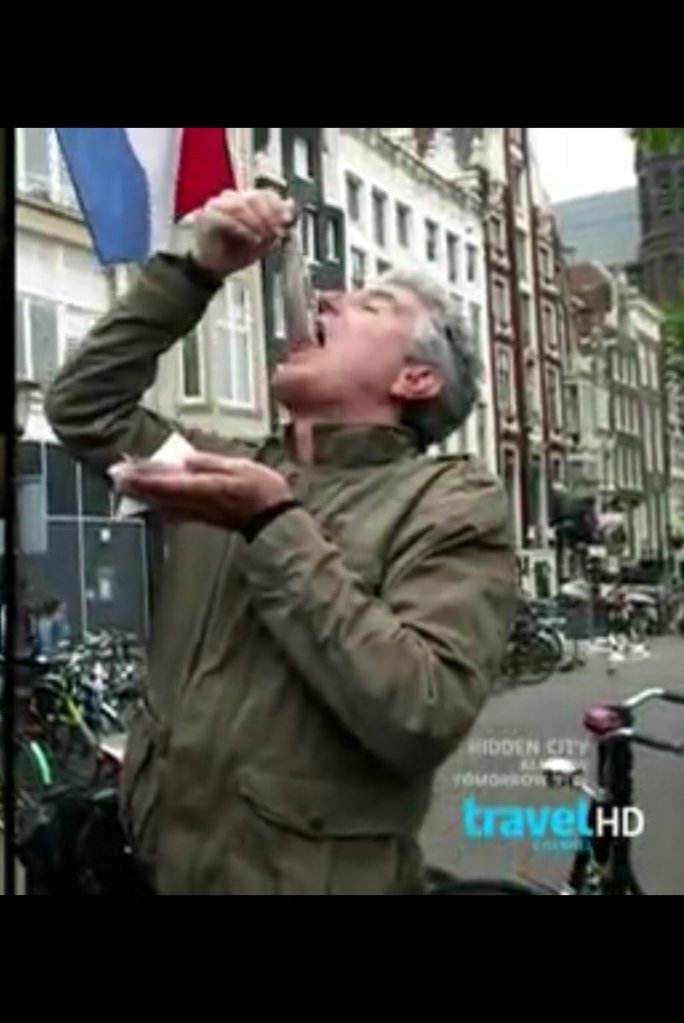
He never visited The Netherlands for an hour long episode of any of his shows and I can understand that. His only visit to Amsterdam was in 1970 when he, like so many other around that time, slept in the Vondelpark. Living here is great and the food is great too, but the local delicacies are few and not really worth a trip for. He did record an episode of The Layover where he stays in a city for 36 hours and eats and visits places. And in those 36 hours he basically ate what all tourists though. Some snacks but nothing earth shattering. Some cafes, pancakes, herring and yes even the FEBO. If you like fried stuff and have never been here visit one of these. It’s a wonderful smorgasbord of fried stuff with influences from Indonesia, America, Germany and more.

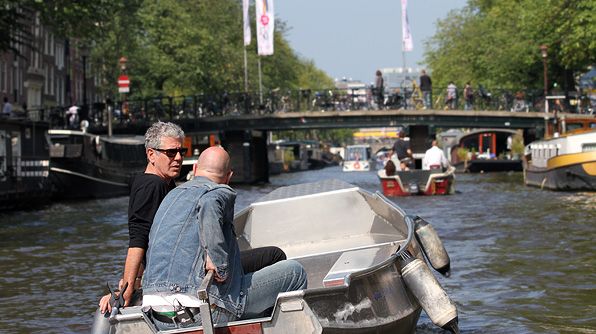
But there is one part of the episode that is very exciting. For a few hours he visited In De Wildeman. He sat outside with Dutch actor Cees Geel and drank beers. And for once he actually seems to enjoy sitting somewhere and not be part of the touristy nightmare that it most of Amsterdam. No more talk of prostitutes, herring and drugs.

A person on the local production staff always liked In De Wildeman and somehow got it into the show. And he really is as long as they say in the city. No fancy editing or lying. 36 hours is 36 hours. If you seem him tired and cranky, it is because he is.

Beer is a common thread throughout all of Bourdain’s work. When you watch an episode, notice that he is usually drinking a beer at a meal. Whether this is in Europe or his beloved South-East Asia, a bottle of cold beer is usually standing on the table. Wine and spirits only when the item in the show is particularly about it.

After the episode aired, and especially after his death, people who visit Amsterdam sometimes try and visit all the places that Bourdain went to on his short trip. And of course In De Wildeman is part of that pilgrimage. Quite often people come up to the In De Wildeman staff to say they are there because of Bourdain.

The few hours spent there is what every traveler to Amsterdam should do. A quiet oasis of bliss in an otherwise overcrowded city.

Oh, and about that smoking of the weed you are probably wondering about? Throughout the episode he jokingly abstains from doing it, because of television rules and regulation in the US. But legend has it he did go smoke afterwards. And that it wasn’t a short time…